
In most cases, yes, you should separate branded vs non-branded Google Ads campaigns. When both sit in the same bucket, the results often look better than they really are.
That happens because branded searches usually cost less and convert faster. Non-branded searches usually cost more, bring colder traffic, and do the harder work of finding new customers. If you want clear reporting and tighter control, separation is the safer move.
A branded campaign targets people searching for your business name. A non-branded campaign targets service terms, problem terms, and broader buying intent. Those two audiences behave differently, so they shouldn’t share the same campaign.
Putting them together muddies the story. Brand clicks may make your return look strong, even when prospecting traffic is underperforming. It is a bit like mixing repeat customers and first-time walk-ins in one sales report. Revenue still shows up, but you lose the detail that tells you what is working.
Here is the simplest side-by-side view:
| Campaign type | Search intent | Usual CPC trend | Main purpose |
|---|---|---|---|
| Branded | Looking for your business | Lower | Defend demand you already earned |
| Non-branded | Looking for a service or solution | Higher | Reach new buyers |
The big takeaway is simple: branded traffic measures demand you already have, while non-branded traffic measures growth.
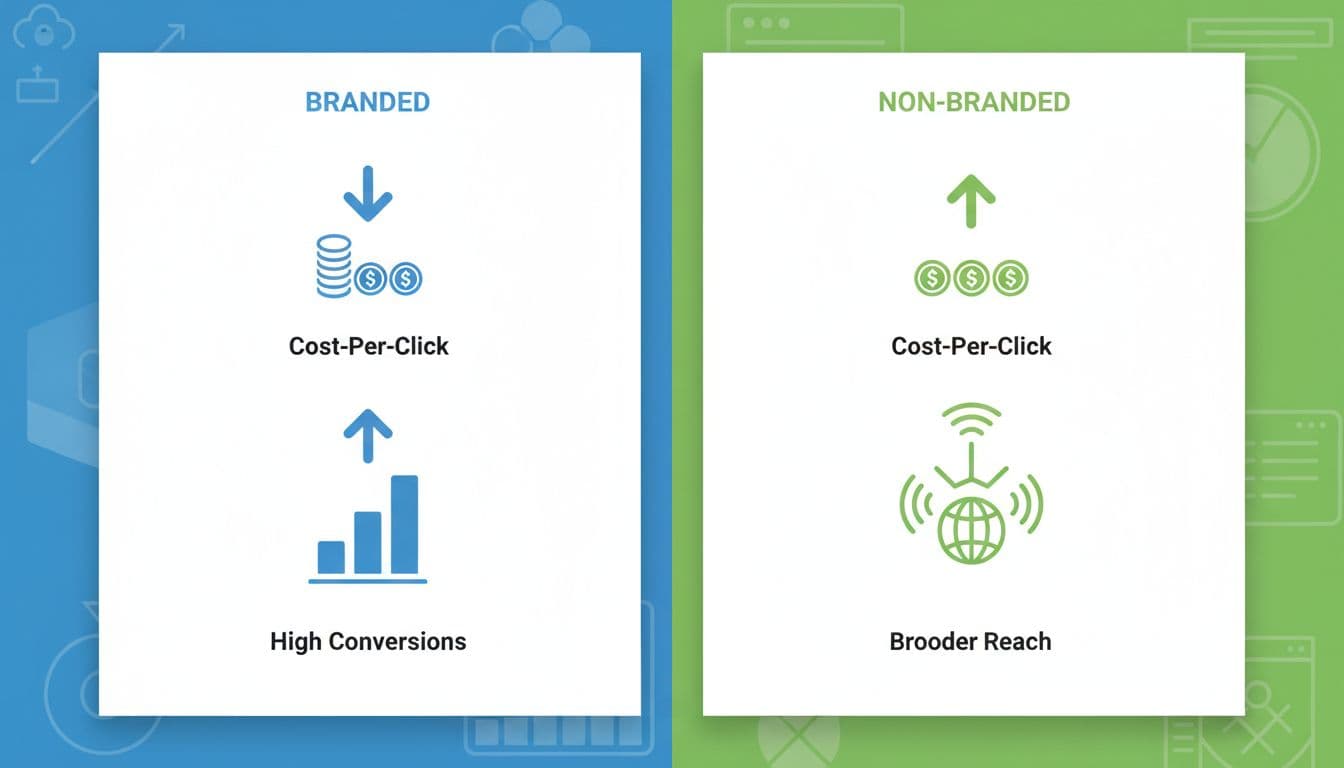
If brand and non-brand clicks share one campaign, cheap branded conversions can hide weak prospecting traffic.
This also affects bidding. If Google sees a blended conversion rate, it may bid too aggressively on non-brand terms because brand traffic makes the account look healthier than it is. A sharp breakdown from Adnan Agic on mixed brand and non-brand campaigns explains why blended data leads to bad decisions. In addition, Adthena’s guide to brand and generic paid search notes that clean separation matters even more as search results get crowded and AI-heavy pages reduce easy clicks.
Separation matters even more when your budget is tight. Small businesses do not have room to guess. You need to know whether your money is protecting your name or creating new demand.
If people already search for your company, branded campaigns are worth protecting. Competitors can bid on your name. So can directories and lead-gen sites. A small branded campaign can keep you visible and help you control the message. Those clicks often come from people who are ready to call.
If your business is new and almost nobody searches your name, the branded campaign can stay small. In some cases, it can wait. Still, keeping it separate makes future reporting cleaner once awareness grows.
This split is especially useful for local service businesses. Branded clicks often come from referrals, past customers, word of mouth, or organic rankings. Non-branded clicks come from people who need a plumber, roofer, lawyer, or dentist but have never heard of you. Those are not the same leads, so they should not share the same budget logic.
That is also why strong PPC should sit beside long-term organic growth. If you need fast leads, a well-run paid campaign helps. If you want to rely less on paid clicks over time, SEO needs to build brand demand in the background. A clear SEO vs Google Ads comparison shows why many small businesses need both speed and staying power. When you want tighter control over lead quality, active Google Ads management services make the separation useful instead of cosmetic.
Keep the setup simple. Give branded and non-branded campaigns their own budgets, their own goals, and their own reporting. Do not let one campaign absorb the lessons of the other.
For branded campaigns, most small businesses want tight keyword control. Exact match and phrase match often make sense because search volume is limited and intent is clear. For non-branded campaigns, structure around service lines or high-intent themes. That helps you see which services truly bring profitable leads.
You also need to stop overlap. Add your brand terms as negatives in non-branded campaigns when appropriate, and watch search terms often. If you are testing both sides, this Google Ads Community discussion on competing keywords is a useful reminder that campaign separation only works when the traffic stays clean.
Then measure them differently. A branded campaign should usually show strong click-through rate, lower cost, and high conversion rate. Non-branded campaigns deserve a harder look. Watch cost per qualified lead, not only cost per lead. A cheap form fill from the wrong job type is still wasted money.
This matters more in 2026 because paid clicks are not getting cheaper. If your prospecting traffic gets expensive, review search terms, landing pages, and lead quality before raising bids. If costs still climb, this guide on why Google Ads CPL jumped overnight helps you troubleshoot the real cause. For many small businesses, the bigger win is pairing leaner ad structure with results-based SEO, so you are not renting every lead forever.
Most small businesses should separate branded and non-branded campaigns because the traffic is different, the costs are different, and the job of each campaign is different. Clean separation gives you cleaner decisions.
When your reports tell the truth, you spend better. That is the real point, whether you are managing ads, building local visibility, or investing in results-based growth that has to pay for itself.


