
Manual photo geotags sound smart. Add a location tag to an image, upload it, and maybe Google trusts your business more. It’s a clean idea, but current evidence doesn’t give it much weight.
For most small businesses, geotagged photos in local SEO are not a reliable ranking boost. Fresh, original photos can help your local presence, but the hidden GPS data inside those files usually doesn’t.
That difference matters because weak tactics eat time, and local SEO works best when each task has a clear path to rankings, calls, and leads.
A geotagged photo is simply an image with location data stored in its EXIF metadata. Years ago, many local SEO checklists pushed this tactic for website images and Google Business Profile uploads. The pitch was easy to believe: if the file says where the photo was taken, Google may connect the business to that place.
Recent tests don’t support that as a dependable ranking factor.
Research summarized by Search Engine Land’s coverage of the Local Falcon study found a narrow lift for some “near me” searches in the targeted area. However, those same tests also showed drops for city-name searches, and no broad, reliable ranking win.
Another geotagged image ranking study reached a similar middle ground. It found no overall effect on local rankings, even though a subset of “near me” queries showed movement in some cases.
That’s the key point. Manual geotagging may produce a small effect in edge cases, but it does not give small businesses a repeatable local SEO advantage.
Other recent tests point even more strongly in that direction. Sterling Sky and Whitespark both reported no meaningful ranking lift from geotagging. Their findings also line up with a practical issue: Google often strips or ignores image metadata after upload, and it can assign location context from stronger signals anyway.
Photos matter. The geotag inside the file usually doesn’t.
If you’re trying to rank in the map pack, geotags belong near the bottom of the list.
The idea survives because it mixes one true thing with one weak assumption.
The true part is this: photos can help local SEO. A complete Google Business Profile with real, recent images often looks more trustworthy. Good photos can increase clicks, calls, and direction requests. They also help Google read visual clues, such as your storefront, branded vehicles, tools, menu items, or office interior.
The weak assumption is that the metadata inside the photo caused the result.
In many cases, the lift comes from the image itself, not from the hidden location tag. If you upload ten real job-site photos, your profile becomes more complete and more useful. Customers interact with it more. Google gets more proof that you’re a real business in a real place. Those are all stronger signals than EXIF coordinates.
There’s also a privacy angle. A recent 2026 review of geotagging and local rankings explains why uploaded image metadata is often stripped or ignored. From Google’s side, that makes sense. EXIF data is easy to edit, so it isn’t a trustworthy source on its own.
A lot of business owners also see rankings rise after a batch of SEO work and give geotagging the credit. But rankings rarely move for one reason alone. At the same time those photos went live, the business may have improved categories, earned new reviews, fixed citations, updated service pages, or posted fresh GBP content.
So the confusion is understandable. Photos often help. Geotagging usually doesn’t.
If your goal is more map pack visibility, there are better places to spend time.
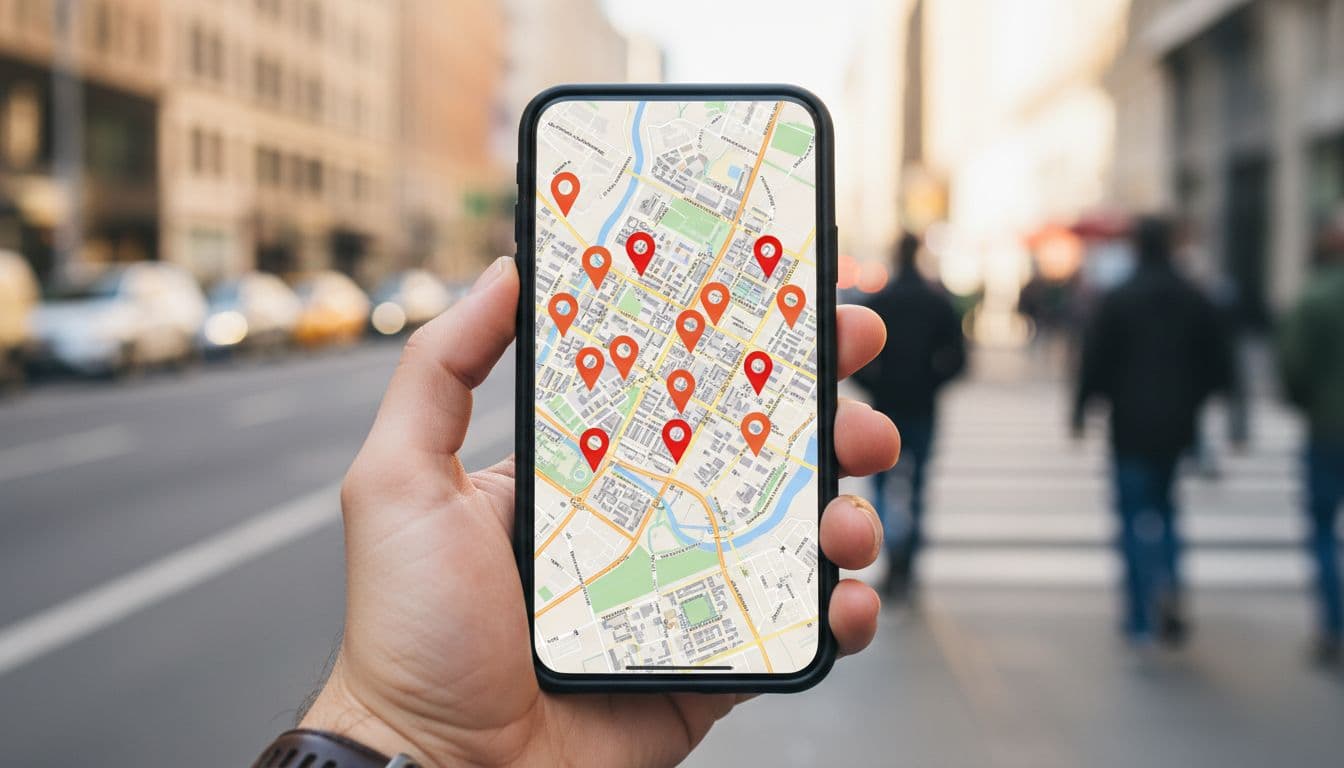
Google looks at a cluster of signals, not a single trick. Your primary category, review flow, website quality, business details, proximity, and profile activity all carry more weight than manual EXIF edits. That’s why strong Google Business Profile optimization tends to beat photo hacks every time.
This quick comparison shows where the payoff usually sits:
| Tactic | Effort | Likely impact on local rankings |
|---|---|---|
| Manual geotagging of image files | Medium to high | Low to none |
| Uploading original local photos | Medium | Moderate |
| Fixing GBP categories and services | Medium | High |
| Earning and replying to reviews | Ongoing | High |
| Consistent NAP and local schema | Medium | High |
| Strong local service pages | Medium to high | High |
The takeaway is simple. Use photos, but don’t treat geotags as the engine.
For small business owners, the best local SEO work has a clear line to results. If an agency spends a lot of time talking about file metadata and very little time talking about rankings, leads, and map visibility, that’s a warning sign. Results-based SEO focuses on actions you can track, such as call growth, keyword movement, and local pack reach.
That doesn’t mean photos are unimportant. It means their job is different. They support trust, engagement, and profile quality. They do not replace the heavier local ranking signals that drive steady traffic.
Small businesses don’t need more SEO chores. They need work that produces movement.

A good photo plan still belongs in local SEO. The smarter approach is to use images as proof of local presence and quality, not as containers for hidden tags. Upload real photos from your business, then place them where customers and Google can see them.
The most useful images usually include:
On your website, use clear filenames and honest alt text when it fits. On your Google Business Profile, post fresh images on a steady schedule. Avoid stock photography when you can. Google is better at spotting reused or generic imagery than many owners think.
This is also where performance-minded SEO stands apart. A serious local strategy doesn’t chase every tip that floats around social media. It measures what moves rankings and what brings leads. That means watching calls, forms, map views, keyword positions, and revenue trends, then cutting low-value tasks.
If you’re shopping for help, ask direct questions. Which actions are tied to page-one visibility? How will progress be reported? What happens if the work doesn’t move rankings? Those questions matter more than “Do you geotag images?”
A lot of businesses are tired of paying retainers for activity that looks busy but doesn’t change the scoreboard. If you want to compare approaches, these transparent marketing investment plans show the kind of accountability local businesses should ask for. The right SEO plan should connect work to outcomes, not hide behind technical-sounding extras.
Geotagged photos are not the local SEO shortcut many business owners hoped for. In 2026, the hidden location data inside an image file has little to no reliable effect on rankings.
Real photos still matter because they build trust, improve profile quality, and help prove your business is real. Put your effort into the signals Google and customers can both see: a strong GBP, original local images, steady reviews, accurate business data, and pages built to rank.
The best local SEO work is still the work that produces measurable results. Photo metadata rarely makes that list.


