
Buying Google Ads won’t push your website higher in organic search tomorrow. Google treats paid ads and organic rankings as separate systems, so paying for clicks does not buy better SEO positions.
Still, many small businesses get confused because both show up on the same results page. The real answer is simple: ads don’t directly improve rankings, but they can make your SEO strategy smarter, faster, and more profitable.
If Google rewarded ad spend with better organic rankings, search would turn into a pay-to-win mess. That isn’t how it works. Organic rankings come from Google’s search systems, which look at relevance, page quality, site experience, links, and search intent. Ads run through a separate auction.
A recent SEO vs Google Ads comparison for 2026 makes the same point. Paid visibility is fast. Organic growth takes work. One doesn’t flip a switch for the other.
Here’s the easiest way to think about it:
| Claim | True or False | Why | | | | | | Running Google Ads boosts organic rankings | False | Paid ads and organic rankings use different systems | | Google Ads can improve SEO strategy | True | Ads reveal which keywords, pages, and offers bring leads | | Ads can help while SEO grows | True | You stay visible while organic pages build traction |
That distinction matters more in 2026 because the search page is crowded. Ads, local packs, and AI answers take up more space than before. So your site can hold the same organic ranking and still get fewer clicks. For local businesses, that means ranking alone doesn’t tell the whole story.
This is why small business owners should stop asking if ads “help rankings” and start asking if both channels produce calls, forms, and booked jobs. If you’re paying for traffic, or waiting on SEO, the scoreboard should always be leads.
The real google ads seo connection is indirect, not magical. Ads give you fast feedback. SEO gives you lasting visibility. Used together, they can shorten the guesswork.
For example, paid search can show which terms bring real buyers, not window shoppers. If one service keyword gets clicks but no calls, you probably don’t want to build your whole SEO plan around it. If another keyword turns into strong leads, that’s a better target for service pages, FAQs, and local content.
Ads also help test offers and landing pages. You can learn which headline gets calls, which service pitch falls flat, and which town pages attract better leads. Then you carry those lessons into SEO. That’s far better than publishing pages and waiting six months to see what happened.
Ads don’t make Google trust your site more. They help you learn faster.
This is where a results-based approach matters. Fast data from ads paired with pay-after-results SEO gives small businesses both speed and accountability. Instead of hoping a monthly retainer pays off someday, you can judge progress by lead quality and ranking movement that ties back to revenue.
Another good breakdown of this overlap appears in Google Ads Supporting Your SEO Strategy. The main takeaway is simple: use ads to find what works, then use SEO to build a stronger long-term presence around it.
For many small businesses, Google Ads and SEO work best like renting and owning. Ads rent you the front row today. SEO helps you own more of the street over time.
That mix makes sense in a few common cases:
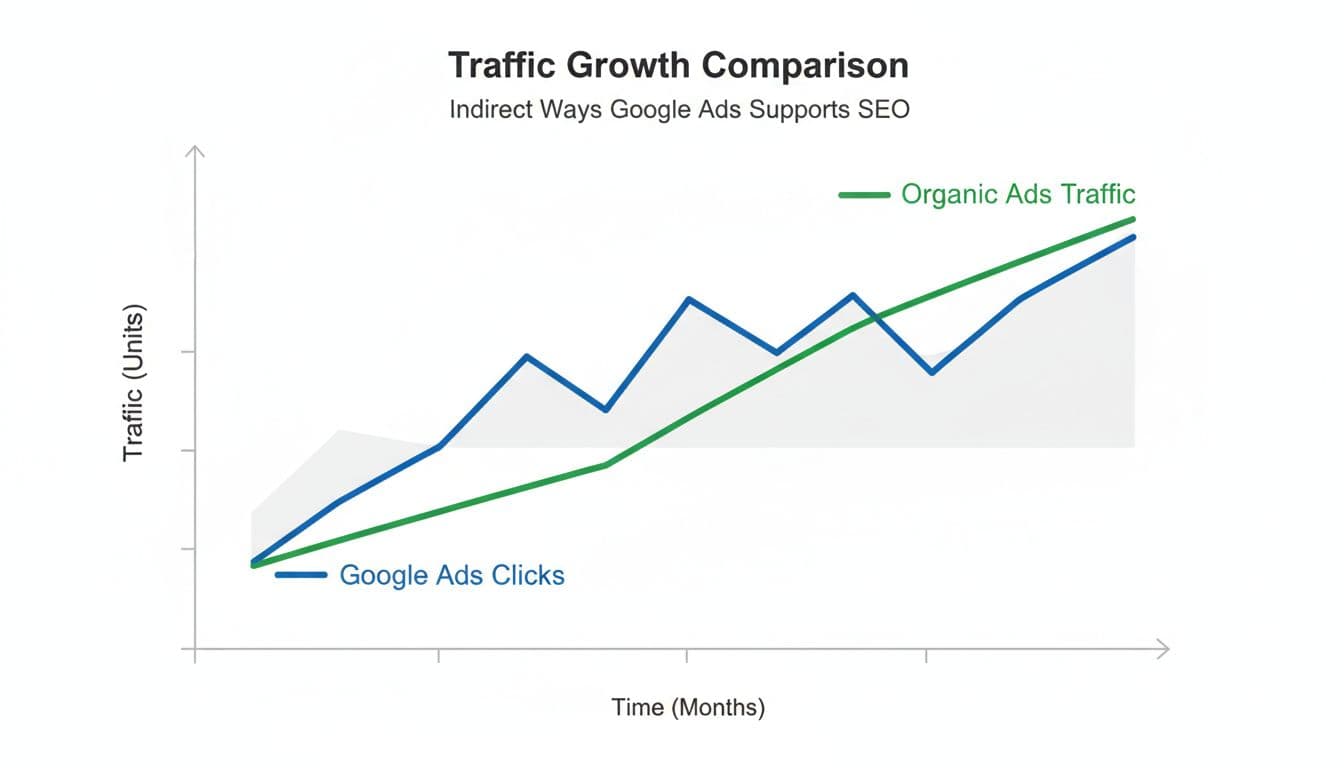
The mistake is relying on ads forever while ignoring your website. That creates a treadmill. The moment you stop paying, visibility drops. On the other hand, relying only on SEO can be slow when cash flow is tight and calls need to come in this month.
A better plan is to run targeted Google Ads campaigns for immediate demand while building SEO pages that can rank without paying per click. If your SEO provider promises results, ask for proof tied to real business outcomes, not vague traffic charts. A simple 30-day SEO scorecard can keep both channels honest.
You should also watch what happens after the click. If ads drive leads outside your service area, or your SEO traffic lands on weak pages, neither channel is doing its job well. Search visibility is nice. Qualified leads are better.
If you want one more outside view, this Google Ads and SEO integration guide explains why the strongest search strategies use both channels with clear roles.
Google Ads does not directly improve organic rankings. That’s the myth. The truth is still useful: ads can show you what buyers search, what messages work, and where your SEO should focus next.
For a small business, the best setup is rarely ads or SEO. It’s usually both, tracked with discipline, judged by leads, and built around results you can see in the bank.


