
Sending paid clicks to your homepage feels safe. In most cases, it wastes intent.
When someone searches, clicks your ad, and lands on a page built for everybody, friction starts fast. Your homepage has too many jobs. A strong google ads landing page has one clear job, and that focus usually converts better.
The right page depends on the campaign, but one rule holds up for most small businesses.
If the ad promotes one service, one offer, or one location, send the visitor to a page about that exact thing. A homepage is a lobby. People can walk anywhere. A landing page is the service desk, and it should answer the search right away.
This matters because paid traffic is expensive. Every extra click, scroll, and menu choice gives people a reason to leave. Google also cares about relevance. Its own landing page guidance makes the point clearly: people should land on a page that matches the ad they clicked.
A quick comparison makes the choice easier:
| Search intent | Better destination |
|---|---|
| Brand name search | Homepage or brand page |
| “Emergency plumber near me” | Emergency service page |
| “Roof replacement estimate” | Estimate landing page |
| “PPC agency pricing” | Pricing or service page |
The pattern is simple. Broad, brand-led searches can work with a homepage. High-intent service searches almost always need a dedicated page.
Many small businesses lose money here. They send every ad click to the homepage because it already exists. That saves setup time, but it rarely saves budget. A tighter page usually lifts conversion rate, and that makes each click more valuable.
A homepage usually has full navigation, blog links, service menus, and mixed messages. That works for organic visitors who are browsing. It works poorly for ad clicks because those people already told you what they want.
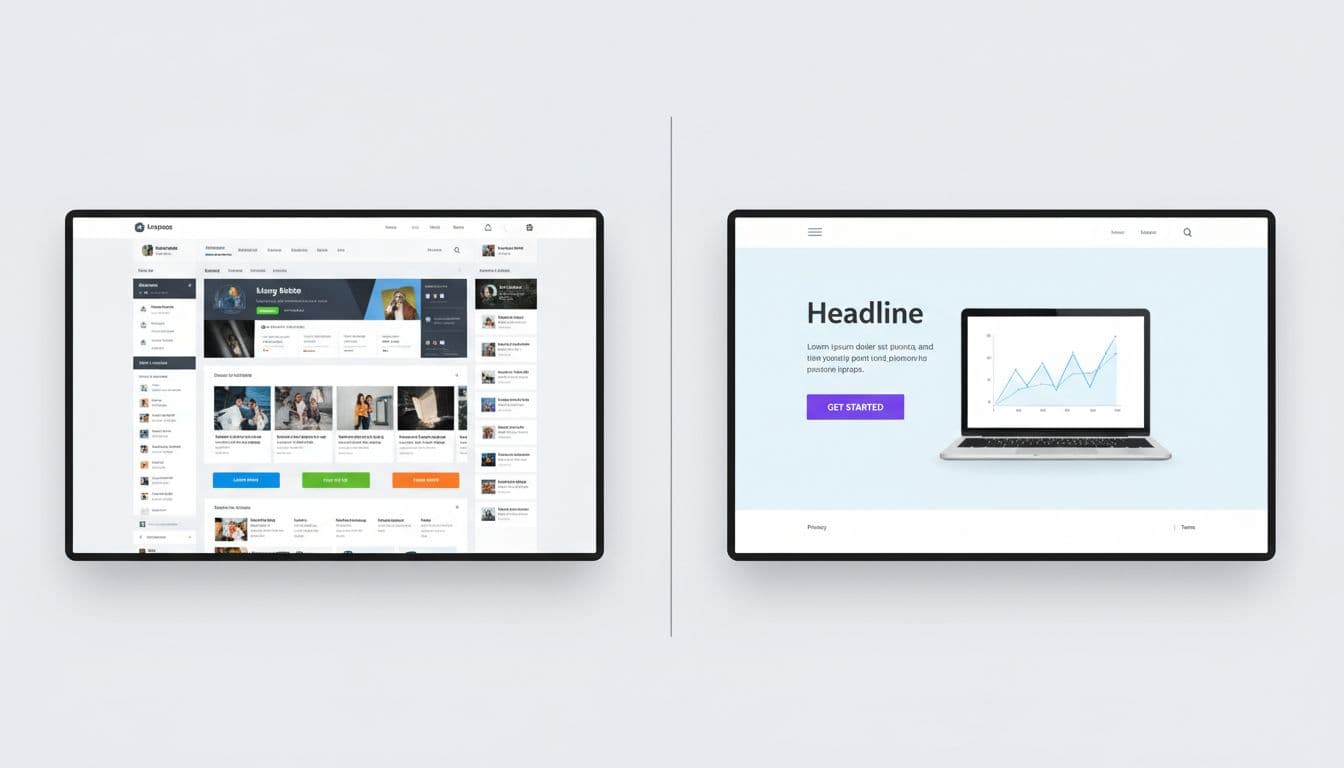
If your ad says “water heater repair” and the visitor lands on a homepage that also talks about drain cleaning, remodels, financing, careers, and coupons, you’ve made them do extra work. Many won’t bother. They hit back and call the next company.
If the ad promises one thing and the page asks the visitor to hunt for it, you pay for the confusion.
This is why strong Google Ads management strategies still need the right page. Better bidding can’t fix a weak destination. In many accounts, poor page match pushes bounce rates up and leads down. Then cost per lead climbs, even when clicks look fine.
Homepages also tend to load more slowly because they carry more design elements, scripts, and links. On mobile, that delay hurts even more. Small businesses don’t need a prettier homepage for paid search. They need a page that gets the visitor from click to call with less friction.
There are cases where the homepage is fine. Branded campaigns are the clearest example. If someone searches your business name, they may want the main site, not a stripped-down landing page.
A homepage can also work when your site is tiny and focused. Some single-service local businesses already have a homepage that acts like a landing page. It has one headline, one service, one phone number, and very little navigation. In that case, the label matters less than the structure.
Awareness campaigns can be another exception. If your goal is to introduce the brand, show your full service range, or support a broad remarketing push, the homepage may fit. Still, keep expectations realistic. Homepages usually convert lower than pages built around one offer.
The test is simple. If the visitor can land, know they’re in the right place, and act within seconds, the homepage may work. If they need to browse, it probably won’t.
A good google ads landing page doesn’t need fancy design. It needs clarity, proof, and a clean next step. That’s why results-first marketers focus on message match. The ad and the page should feel like the same conversation. This is also why landing pages matter more in Google Ads in 2026.

For most service businesses, the page should include:
If you run a results-based model, track calls and forms closely. Traffic alone doesn’t pay the bills. The page has to produce real leads you can measure. The same rule applies in performance SEO. Visits matter less than booked jobs.
That mindset shows up in this performance-based landing page blueprint, which keeps the page tied to one offer and one action. Small business owners should also view paid ads and SEO as a team. Ads bring speed. SEO builds steady visibility, which lowers your dependence on paid clicks over time.
A homepage feels safe because it’s familiar. Yet paid traffic performs best when the path is short and obvious.
If the ad targets one service, one problem, or one city, send that click to a page built for that intent. Use the homepage for brand traffic, and let landing pages do the hard work of turning ad spend into leads. For small businesses, that simple shift often improves results faster than any bid change.


