
You can rank a single Google Business Profile in more than one city, but only up to a point. If your office sits near city lines, or you serve nearby towns, your profile may appear in several local searches.
That said, one profile does not give you equal strength everywhere. If you want steady visibility across multiple cities, you need more than a well-filled profile. You need the right local SEO setup behind it.
Google Business Profile is built around one real business location. That location acts like the center of gravity for your local rankings. Your listing may still show in nearby cities, especially if searchers are close to you, your category fits well, and your business has strong local signals.
Still, a single profile usually ranks best near its real address. As the search moves farther out, your odds drop. That lines up with current local search behavior and with guidance echoed in Optuno’s multi-location SEO guide.
One Google Business Profile can reach more than one city, but it usually ranks strongest close to its address.
This quick table sets the expectation:
| Business setup | Can one GBP appear in several cities? | What usually works best |
|---|---|---|
| One office near city borders | Yes, often in nearby cities | One strong profile plus city pages |
| One service-area business address | Sometimes, mostly nearby | GBP, reviews, and unique area pages |
| Real offices in several cities | No single profile should cover all | One profile per real location |
So if you’re asking about a Google Business Profile across multiple cities, the honest answer is yes, but not evenly. One listing can stretch into neighboring markets. It rarely dominates every city you serve.
That matters because many small business owners assume adding service areas inside GBP solves the problem. It doesn’t. Service areas can help Google understand where you work, but they do not replace local relevance in each market.
Local search still leans hard on proximity. When someone types “plumber near me” or “roof repair in Garland,” Google wants a business that is both relevant and close enough to trust for that job.
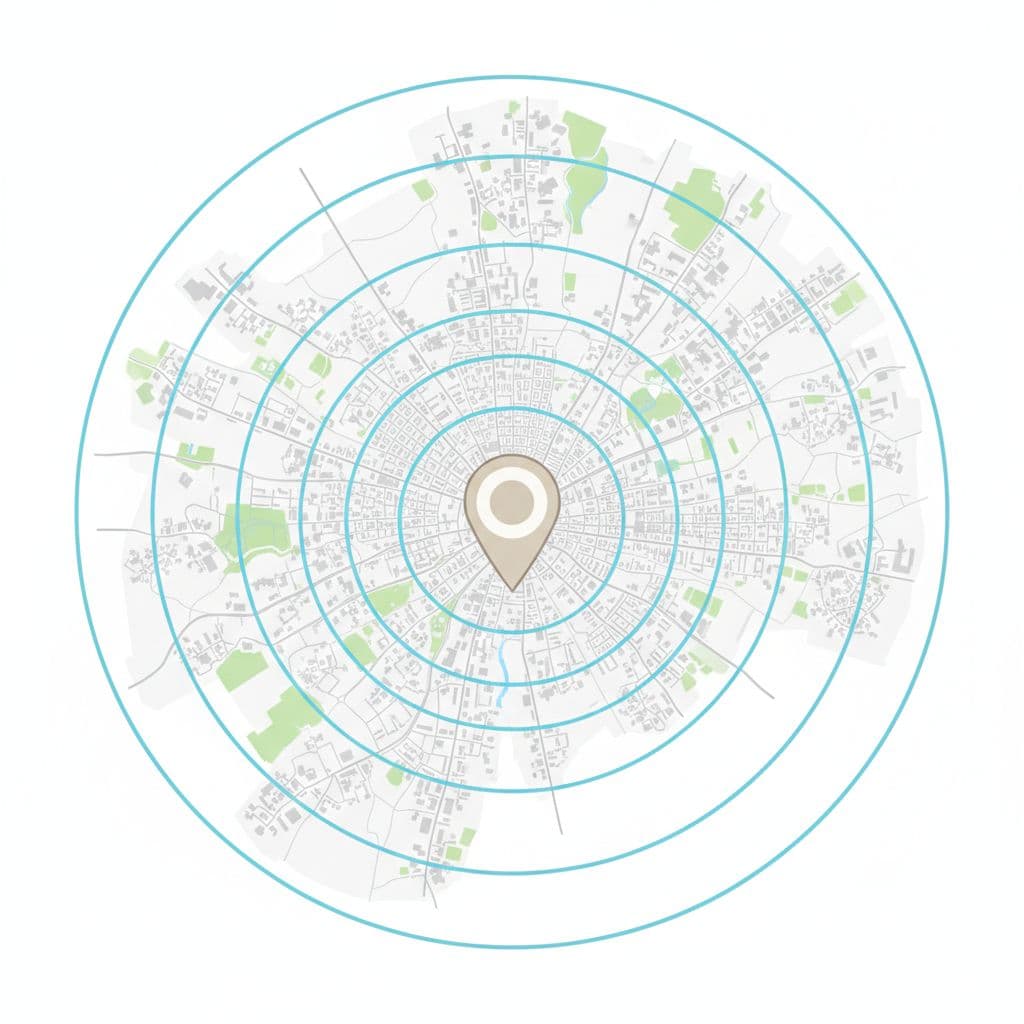
That is why your profile may rank in the next town over, yet struggle two or three cities away. The farther the search gets from your address, the more Google tends to favor businesses with a real location in that city. This is even more obvious in crowded trades, legal services, med spas, and home services.
Service-area businesses feel this most. You can hide your address and list the cities you serve, but Google still knows where you are based. The profile does not become city-wide just because you checked ten service areas.
Reviews and brand strength can push your reach a bit farther. A solid website can help too. However, distance still acts like a tax on visibility. You can overcome some of it, not all of it.
For small businesses, that means expectations matter. If an agency promises top map rankings in five cities from one address with no supporting work, be careful. Local SEO works best when the plan matches how Google already behaves.
If you want reach beyond your home city, your website has to do more of the work. Your profile helps open the door, but your site often decides whether you can rank in nearby markets with any consistency.
The strongest move is to build city pages that are truly local. That means each page needs details tied to that city, not a copy-and-paste swap of the place name. If you’re trying to rank for multiple service areas, this guide to ranking for multiple service areas lays out the right approach.
A useful city page usually includes:
This is where many multi-city campaigns fail. Owners publish ten thin pages with the same copy, then wonder why none of them sticks. Google often indexes those pages and then gives them little visibility because they don’t add much.
If you have real offices in more than one city, each location should have its own profile. That point is also reinforced in Dlinkers’ multi-location GBP strategy. One real address, one profile. Two real staffed addresses, two profiles.
Meanwhile, if you only have one real office, build authority around that office and expand with smart local landing pages. Add reviews from customers in those target cities when you can. Mention those jobs on the site. Link your city pages clearly in the main site structure. This is how a single business profile and a strong website can work together.
The fastest way to lose ground is to fake local presence. Virtual offices, mail drops, PO boxes, and borrowed addresses are risky. Google can suspend a profile if the address is not a real, staffed location during stated business hours.
Some businesses also create multiple profiles for one location, hoping to grab more map space. That can trigger filtering, merges, or suspension. Even if the listing survives, the tactic usually creates a mess with reviews, citations, and trust.
Your website can also hold you back. Thin city pages, duplicate content, and weak internal linking often leave pages indexed but invisible. If that sounds familiar, this breakdown on why site pages are not ranking is worth a read.
Another common mistake is treating service areas like a ranking hack. They aren’t. They help define where you serve customers, but they don’t make you local in every city on the list.
A safer approach is simple. Use your real location. Build out the cities you serve on the site. Add proof that you do work there. Keep your name, address, and phone data consistent everywhere. Local SEO rewards credibility far more than shortcuts.
Small business owners don’t need prettier rank trackers. They need more calls, more form fills, and more booked jobs from the cities that matter. That is why multi-city local SEO should be measured by outcomes, not noise.
If your provider talks only about impressions, map views, or broad traffic, you’re missing the point. A better scorecard tracks rankings by city, leads by city, and the pages that drive those leads. This matters even more when you’re trying to extend one Google Business Profile into multiple nearby cities.
Performance-based SEO makes more sense here because the goal is clear. You want real visibility in target markets, then real leads from that visibility. If the work doesn’t move rankings or revenue, the report doesn’t mean much.
It also helps to set honest timing. A city page can get indexed fast and still take time to rank. A profile can improve in one nearby suburb long before it shows in a tougher city across the county. If you want a grounded view of timing, this guide to local search ranking expectations gives a realistic frame.
The best local SEO plans are boring in the right way. They fix the profile, strengthen the site, build location proof, and measure lead flow. That’s how you grow across cities without betting your business on fake addresses or empty promises.
One Google Business Profile can rank in multiple cities, but it usually does that best in nearby areas. The farther you push from your real address, the more your website, reviews, and local proof have to carry the load.
If you serve several cities from one location, focus on real local signals. Build useful city pages, keep your profile clean, and judge success by leads, not vanity metrics.
A single listing can open the map. Your broader local presence decides how many cities you can keep.


