
Your Google Business Profile can win a lead before someone ever lands on your website. That makes every section on the profile worth a hard look, especially the Products area.
For many small businesses, adding products is worth it. But it only helps when those listings reflect what people want, how they search, and what makes them call. If the section is empty, vague, or outdated, it won’t do much.
The real question isn’t whether Google Business Profile products exist. It’s whether they move people one step closer to contacting you.
Local searchers move fast. They scan map results, compare photos, look for prices, and decide whether your business feels like a fit in a few seconds.
That is where product listings can help. A strong product card adds a photo, title, short description, and sometimes pricing. Those details give people more to work with before they click, call, or ask for directions.
Google also gets more context from that added content. When someone searches for a specific item, package, or service near them, a fuller profile gives Google more signals about what you sell. In 2026, that matters even more because local search results are richer, and AI-assisted answers can surface details pulled from business profiles.
Google frames local visibility around turning searchers into customers in its guide to lead generation for local businesses. Product entries support that goal because they reduce friction. A shopper doesn’t have to guess what you offer.
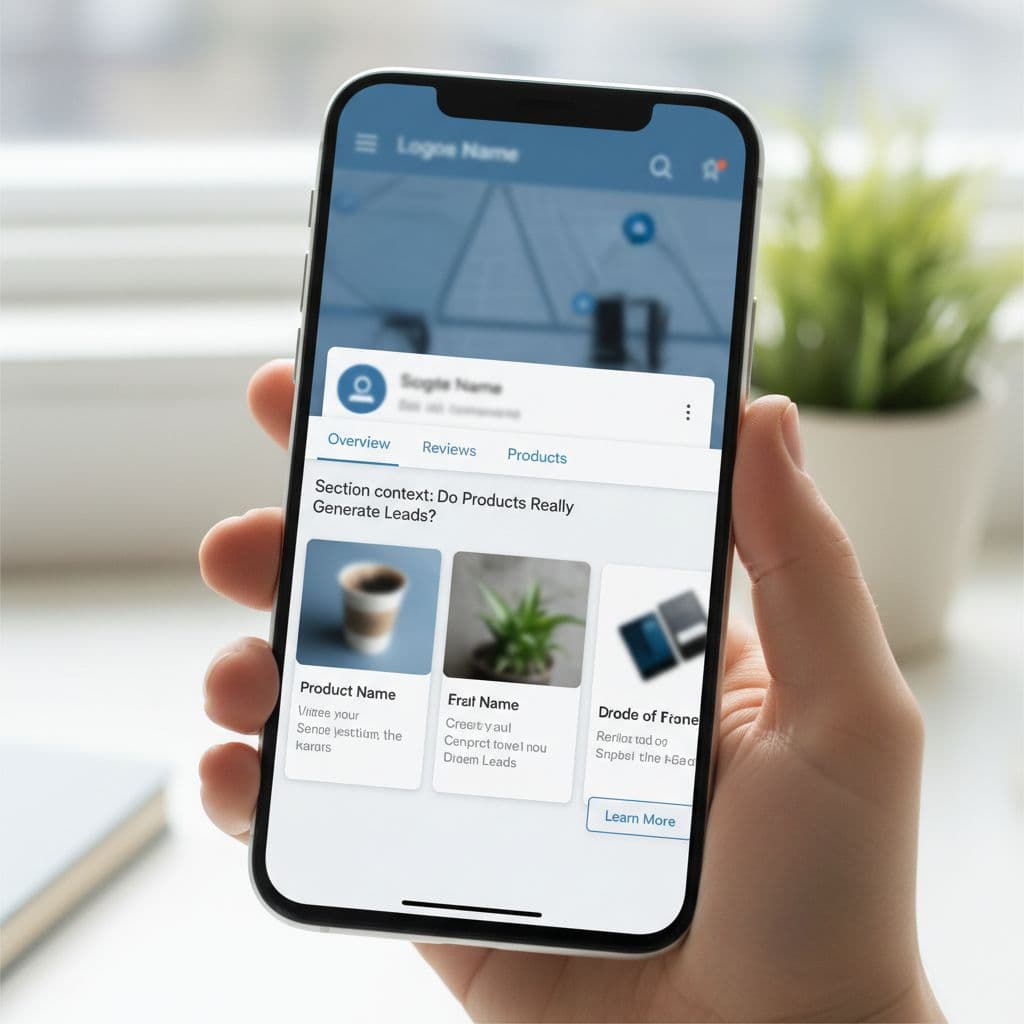
Still, this feature isn’t magic. Products won’t push a weak profile to the top by themselves. Reviews, proximity, category fit, trust, and overall profile health still matter more.
What products do well is simpler. They help your profile look more complete, more current, and more useful. For a buyer who is already close to choosing, that extra clarity can be the nudge that turns a view into a lead.
Some businesses get clear value from product listings right away. Retail shops, florists, jewelers, bike stores, salons, med spas, and home-service companies with standard packages often fit that group.
If a customer can compare your offer in plain terms, products help. A listing for “bridal bouquet,” “teeth whitening session,” or “spring AC tune-up” is easier to understand than a generic company description. The buyer sees the offer and can picture the next step.
Service businesses can benefit too. They don’t need a physical shelf of inventory. They can feature common jobs, starter packages, seasonal specials, or best-selling services. Home-service owners, for example, often get more traction from named offers than from a broad label like “HVAC services.” That lines up with contractor-focused examples of Google Business Profile lead generation.
Products help less when the sale is highly custom and the buyer needs a long sales process. A commercial roofer chasing large bid requests may not get much from listing a few packaged offers. The same goes for firms with shifting inventory that they never update.
Products help most when they answer the buyer’s next question before the buyer has to ask it.
Urgent businesses sit in the middle. A locksmith, plumber, or towing company may not win the lead because of a product card alone. Speed, reviews, hours, and phone access matter more. Even so, a few product entries such as “car lockout service” or “water heater replacement estimate” can still strengthen relevance and help the right searcher choose faster.
The main rule is simple. If your offer can be named, shown, and described in a few words, the Products section has lead value.
A weak product listing fills space. A strong one makes the next click easy.
Most business owners miss that difference because they treat the section like a catalog dump. They upload a few stock photos, write thin titles, and move on. Searchers notice that lack of care right away.
This quick comparison shows the gap:
| Element | Weak entry | Better entry |
|---|---|---|
| Product name | “Service Package 1” | “Whole-Home Deep Cleaning” |
| Photo | Generic stock image | Real photo of the actual work or item |
| Price | Left blank with no reason | Clear price or honest “starting at” |
| Description | “High-quality service for all needs” | Short summary of what the customer gets |
| Link | Homepage only | Closest matching service or product page |
The takeaway is clear. Specific entries outperform generic ones because they match real buying language.
A good title sounds like something a customer would type or say. A good photo shows the item, result, or service outcome without clutter. A good description stays short, concrete, and useful.
Price can help, too. If you have standard pricing, include it. If the job varies, use a starting range only when it’s honest. That simple detail can filter out bad leads and attract people who are ready.
Descriptions work best when they answer one practical question. What is it? Who is it for? What problem does it solve? You don’t need all three every time. You do need clarity.
Keep the wording human. Don’t stuff city names, repeated categories, or awkward phrases into every line. People don’t buy from robotic copy. Google doesn’t need that mess either.
The smartest way to build this section is to start small. You do not need to upload every item, every variation, or every service you offer.
Pick the offers that bring the best leads. That usually means best-sellers, high-margin jobs, entry-point services, or offers people ask for by name.
A simple setup process keeps the work manageable:
Service businesses should think in terms of packaged choices. A pressure washing company can list driveway cleaning, house wash, and deck cleaning. A med spa can list lip filler, laser hair removal, or a membership special. A law firm probably won’t list every case type, but it might feature “free injury case review” if that is a common starting point.
Accuracy matters across the web, too. If your profile highlights one offer but your site and business details feel inconsistent, trust drops. That’s one reason why local citations matter for SEO in 2026 still comes up in local search discussions. Google wants a business that looks real, stable, and easy to verify.
Also, keep the section alive. Update seasonal offers, remove old items, and swap weak photos. A stale Products tab can make the whole profile feel neglected.
A strong product section helps, but it doesn’t carry the whole load. Small business owners run into trouble when they confuse profile activity with real local SEO progress.
Your main lead drivers are still the basics. Category selection, reviews, profile completeness, location accuracy, site quality, and local trust signals do more heavy lifting than any single feature. Products support those signals. They do not replace them.
That matters because local SEO should be measured by outcomes. If your profile gets views but the phone stays quiet, something is broken. Maybe the wrong categories are set. Maybe reviews are weak. Maybe the site doesn’t back up what the profile promises.
Map accuracy is a common problem. If your marker is off, people get lost, bounce, or lose confidence. That hurts calls and foot traffic even when impressions look fine. This is why optimizing Google Business Profile for calls starts with basic location accuracy.
If profile work doesn’t lift calls, directions, or booked jobs, it isn’t progress.
This is where a performance-first mindset matters. Busywork is easy to sell. Results are harder, and they are what count. An agency can talk about uploading products, posting updates, and tweaking fields for months. If none of that turns into rankings, leads, or revenue, the work missed the mark.
Products belong inside a broader local plan. Use them to sharpen relevance and improve conversion, then back them up with reviews, strong pages, accurate data, and a profile that people trust.
A lot of owners add products and then guess whether they helped. That guesswork is where good ideas go to waste.
Start with a simple before-and-after view. Check your Google Business Profile performance data for calls, website clicks, direction requests, booking actions, and message activity before you add products. Then compare the next 30 to 60 days.
You won’t get a perfect lab test. Local demand changes, seasons shift, and rankings move. Still, patterns show up when you watch the right numbers.
If your product listings link to your site, use tagged URLs so you can tell whether that traffic converted. Match those visits with form fills, booked calls, or purchases. Also, ask leads what they looked up. Front-desk teams hear the truth every day, and that feedback is gold.
For a broader playbook, Birdeye’s steps for lead generation with Google Business Profile line up with the same point: profile features matter most when you connect them to reviews, follow-up, and actual conversion paths.
Time frame matters too. Some wins show up fast, especially if your profile was thin before. Broader local visibility takes longer. If you need a realistic benchmark, this guide on how long local SEO takes to see results gives a grounded picture for small businesses.
Watch for these signs that products are doing their job: more profile interactions, better lead quality, and more people asking for the exact offer you listed. If none of that changes after a fair test, rewrite the entries or swap them out for stronger offers.
The biggest mistake is being too generic. A title like “Best Service” tells the buyer nothing. So does a blurry stock photo and a description filled with sales fluff.
Another common mistake is uploading too much. Local searchers do not want to scroll through 70 near-identical items on a phone. Feature what matters most first. Keep the section tight and easy to scan.
Old pricing can hurt more than no pricing. If your listed amount is far below the real charge, people feel baited. If the price is far too high because it was never updated, you lose clicks you might have won. Honest ranges work better than stale numbers.
Disconnected landing pages also waste traffic. If a product card points to your homepage, the buyer has to hunt for the next step. That extra friction costs leads. Match each offer to the closest page you have.
Maintenance is the last problem. Businesses build the section once, then forget it for a year. Meanwhile, they change offers, retire services, and swap focus. The profile becomes a snapshot of a business that no longer exists.
Google Business Profile products work best when they reflect your current money-makers. They should mirror what your team sells every day, what customers ask for most, and what you want more of next month.
If your profile has access to the Products section, most small businesses should use it. A well-built set of Google Business Profile products can improve relevance, build trust, and make the next click easier.
The catch is simple. Products help when they support a real lead path. They don’t rescue a weak profile, and they don’t replace reviews, rankings, or accurate business data.
Small business SEO should produce results you can feel, calls, booked jobs, store visits, and revenue. When your product listings support that chain, they are worth the effort.


