
A customer says they left a great review, but nothing shows up. If that keeps happening, you’re likely dealing with Google-filtered reviews, not a broken profile.
That matters more than most owners think. Reviews help people trust you, and they also support local rankings. When Google hides legit feedback, it can feel random. In most cases, though, there is a pattern behind it.
The good news is that filtered reviews usually point to a process problem, not a dead end. Once you know what Google is trying to stop, you can collect reviews in a way that looks natural and holds up over time.
Google has tightened review checks in 2026. New reviews can be delayed, hidden, or removed while automated systems look for spam signals. Older reviews can also get re-checked later, which means a review that appeared before might vanish during a sweep.
This push is not only about fake praise. Google also wants to stop review extortion, fake one-star attacks, and coordinated posting. In its update on protecting businesses on Maps, Google says it can pause new reviews on a profile when suspicious patterns appear.
That means honest businesses can get caught in the same net as bad actors. If a review looks unnatural, the system may hide it first and sort it out later.
A five-star review can get filtered for the same reasons as a fake one-star review.
The key issue is often how the review was submitted, not whether it was positive or negative. A sudden burst of reviews, repeated wording, or posts from related accounts can trigger filters. Google’s official review policies also ban incentives, conflicts of interest, off-topic content, and reviews that are not based on a real experience.
For small businesses, this hits close to home because local SEO depends on trust signals. A performance-minded strategy cares about approved, lasting reviews, not inflated counts that disappear next week. In other words, results come from clean signals that stick.
Most missing reviews come from behavior that looks manufactured. Sometimes the customer did nothing wrong. Still, the pattern around the review raises flags.
This quick table shows the most common triggers.
| Trigger | Why Google may flag it | Better approach |
|---|---|---|
| A spike of reviews in one or two days | It can look coordinated or paid | Ask steadily over weeks |
| Discounts or gifts for reviews | Incentivized feedback breaks policy | Ask with no reward attached |
| Reviews posted on your store Wi-Fi or front desk tablet | Shared IP and on-site pressure look suspicious | Send the link after the visit |
| Repeated wording in many reviews | Scripted language looks fake | Let customers write in their own voice |
| Reviews from staff, family, or vendors | Conflict of interest | Only request feedback from real customers |
A perfect five-star streak can also look odd if it arrives too fast. So can a pile of short reviews with almost the same wording. Recent write-ups on Google review problems note that review velocity, account history, and repetitive content are common reasons reviews get suppressed.
That last point matters for local SEO. Google wants a believable pattern, not a sudden applause track. A slower flow of real reviews often works better than a campaign that pushes everyone at once. If you’re trying to set realistic pace goals, these review velocity for long-term SEO wins benchmarks are a helpful reference.
Another trigger is the reviewer, not your business. New Google accounts, accounts that rarely post, or accounts that review lots of businesses in a short span can look risky. The same goes for reviews that mention things the customer could not know, or that feel generic enough to fit any business in town.
So if Google filtered your new reviews, don’t assume your customers lied. More often, the request process or posting pattern sent the wrong signal.
The hardest part is that Google rarely gives you a full explanation. You usually have to spot the clues.
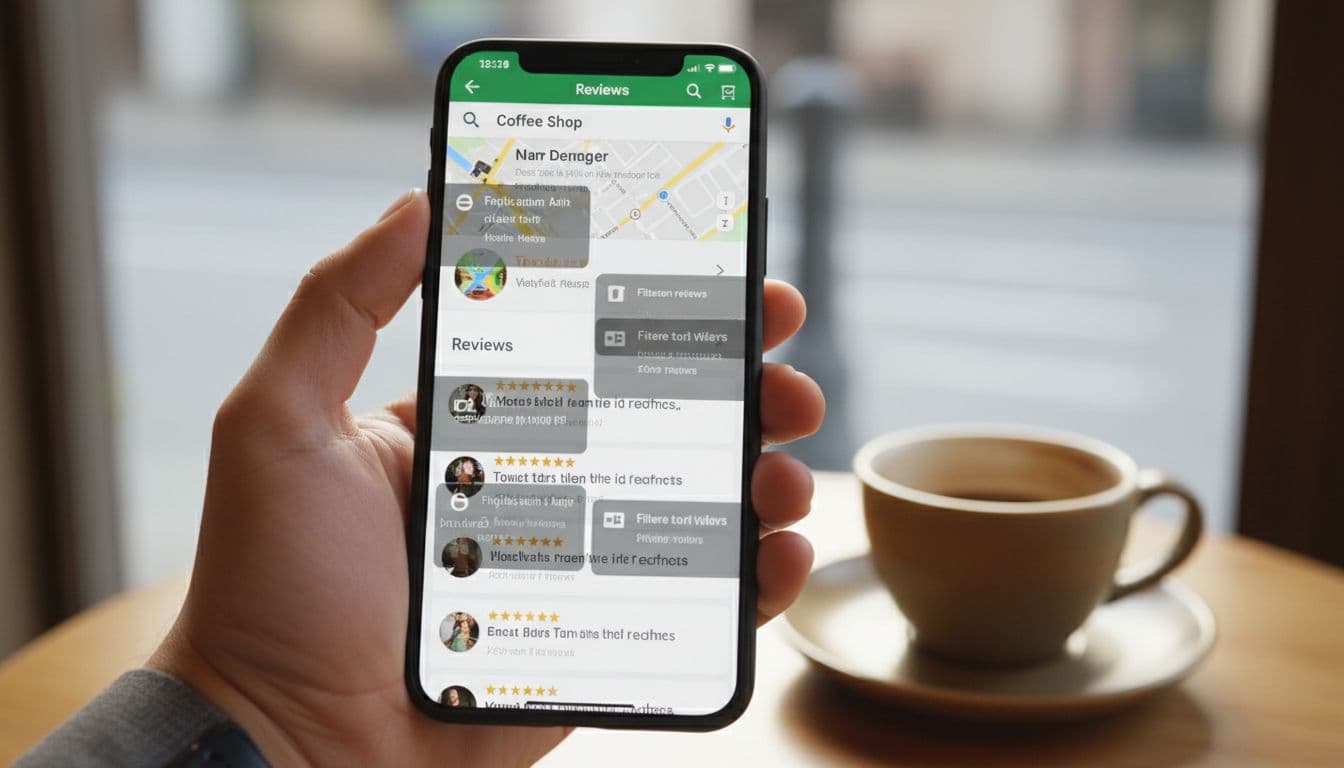
A filtered review often leaves behind one of these signs:
These issues can be temporary. Some reviews sit in a moderation queue before they appear. Others disappear during automated sweeps and later return. A recent breakdown of Google review discrepancies in 2026 points out that delays, count mismatches, and older reviews dropping off are all happening more often as Google tightens moderation.
A missing review also doesn’t always mean a penalty. Sometimes Google is testing trust signals around the reviewer or the business. Still, if the same issue keeps repeating, the process needs work.
This is where patience helps. Local rankings rarely move because of one review. They improve when your business builds steady proof over time. If you want a broader view of how reviews fit into the local SEO timeline to page 1, look at them as one part of an ongoing trust build, not a one-week fix.
The best fix is simple, but it takes discipline. You need a review process that feels normal to customers and clean to Google’s systems.

Start with these habits:
Keep the pace steady. Ten real reviews spread across a month is healthier than thirty in one afternoon. Also, don’t use a staff member’s phone, front desk tablet, or store kiosk to collect reviews. Shared devices and shared networks create patterns Google’s systems dislike.
Your website matters too. Google cross-checks signals. If your profile, reviews, service pages, and location details all line up, the business looks more believable. That’s one reason replying to Google reviews for SEO can help. It adds fresh, relevant activity around your real customer experience.
Most importantly, don’t treat reviews as a shortcut. Strong local SEO comes from a full system: a solid Google Business Profile, accurate business data, useful pages, and steady proof from customers. That’s the difference between vanity metrics and results-based SEO. Approved reviews that stay live are worth far more than a burst that gets filtered.
When Google keeps hiding your new reviews, the problem is usually the pattern, not the praise. Timing, account quality, incentives, and scripted requests can all make real feedback look fake.
The fix is to slow down, ask fairly, and build a review habit that looks natural month after month. For small businesses that care about results, that approach does more than protect reviews. It builds trust that can hold up in Maps, search, and the sales process.


