
Why does Google keep sending people to your homepage when the service page should be doing the heavy lifting? If you’re a small business owner, that can feel backward. The page that talks about the actual service should rank, not the generic front page.
In most cases, this isn’t random. Google is picking the page that looks stronger, safer, and clearer. That usually means your homepage has more trust, better links, and a better match for the search than the service page.
Your homepage is the front desk of your website. Most backlinks point there. Branded searches land there. Directory listings and local citations often mention it too. Over time, that gives the page more trust than anything else on the site.
Google also watches how pages behave. Homepages often load fast, get more clicks, and keep visitors around longer because they offer several paths forward. A thin service page does the opposite. It feels narrow, so people leave fast, and Google gets a weaker signal.
Your Google Business Profile can strengthen that pattern as well. Many small businesses point it to the homepage, not to a service page. As a result, the homepage collects even more local trust signals.
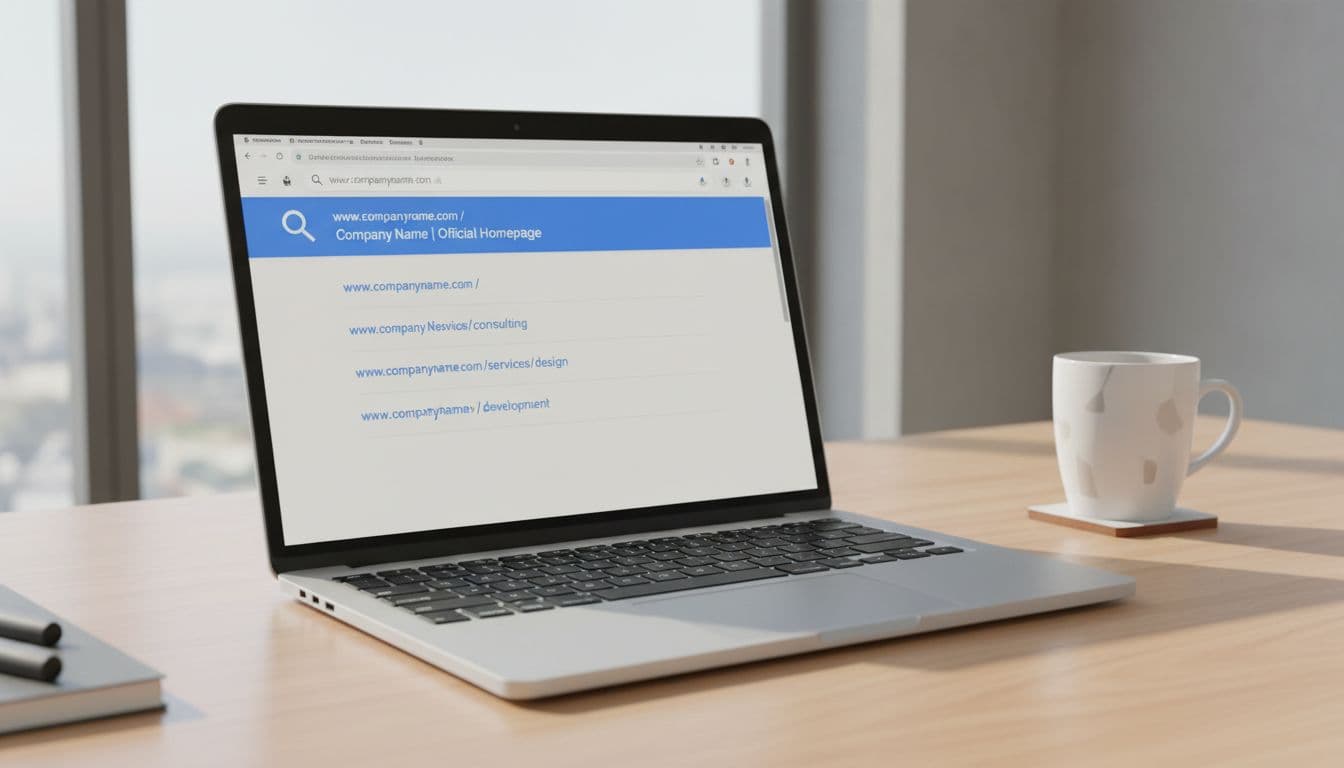
If the search is broad, Google may also think the homepage fits the intent better. A search like “plumber in Tampa” can mean the person wants options, not one narrow subtopic. When your service page isn’t detailed enough, the homepage becomes the safe choice.
If Google keeps picking the homepage, your site hasn’t made the service page the obvious best answer yet.
That’s why stuffing every service into one page rarely works. This explanation of why a homepage can’t rank for everything breaks down the problem well. The homepage ranking service page issue usually comes down to trust, intent, and clarity, not a penalty.
Some homepage rankings are perfectly fine. Your homepage should usually rank for your brand name, broad category terms, and general local searches tied to the whole business.
However, a service page should rank when the search is more focused. If someone types “water heater repair,” “roof leak repair,” or “commercial epoxy flooring,” Google wants a page centered on that exact service. If your homepage wins instead, the service page usually hasn’t given Google enough reason to trust it.
That matters because the homepage rarely converts as well. A visitor lands there, then has to hunt for the exact service. Each extra click is a chance to lose the lead.
A strong service page feels like a specialist. Too many small business sites publish pages that feel like brochures. They repeat the homepage copy, swap a few words, and call it done.
Google can spot that fast. If five service pages say almost the same thing, the search engine may ignore them and keep ranking the homepage. Page conflict also plays a part. When the homepage and service page chase the same term, Google picks the stronger page, which is usually the homepage.
This quick table shows the common gaps:
| Service page problem | What Google reads | Better fix |
|---|---|---|
| Thin or copied copy | Weak intent match | Write unique copy around one service |
| No proof or detail | Low trust | Add reviews, photos, FAQs, and process details |
| Few internal links | Low importance | Link from the homepage, nav, and related posts |
| Same target as homepage | Page conflict | Give each page a separate role |
Good service pages also need real business signals. Add service areas, response times, pricing context, common questions, and proof from past jobs. This breakdown of why service pages don’t rank mirrors what many local businesses run into.
Sometimes the page itself is decent, but the site architecture is working against it. If the service page is buried in a menu, linked once, or missing from the homepage body, Google reads it as less important.

A clean structure passes trust from the homepage to service pages. That means clear navigation, short URLs, helpful breadcrumbs, and internal links with natural anchor text. Blog posts, FAQs, and city pages should support the service page, not compete with it.
If you only serve one town or region, a tight setup matters even more. This single-area performance SEO pricing guide shows why a focused page set often beats a bloated site full of overlap.
Start by narrowing each page’s job. Let the homepage cover the business as a whole. Then let the service page own one service and one main local angle.
Next, strengthen the page with proof. Add project photos, short testimonials, service steps, FAQs, and trust cues that relate to that exact offer. After that, build internal links from the homepage, nearby service pages, and relevant blog posts.
Then reduce overlap. If the homepage uses the same headline, same copy themes, and same calls to action as the service page, rewrite it. Give Google a clear choice instead of two pages fighting for the same space.
Don’t overreact and strip the homepage down to nothing. You don’t need to remove all value from it. You need to make the service page more relevant, then support it until Google starts treating it as the better result.
Finally, judge the fix by leads, not by vanity movement. Small business SEO should put the right page in front of the right buyer. That’s why some owners prefer Piggybank’s performance SEO service, where rankings have to show up before billing starts. Results-based SEO keeps the focus on pages that can turn search traffic into calls.
If your homepage outranks your service page, Google isn’t being weird. It’s following the strongest signal on your site. Build a stronger page, send clearer internal links, and stop making the homepage carry every term. The right page should win, because that’s the page that turns searches into sales.


