
Most small businesses don’t need hundreds of backlinks. They need enough local backlinks to beat the businesses already winning in their city.
That number changes by market. A roofer in a small town might move with 15 strong links, while a personal injury lawyer in a major metro may need far more. The smart move is to stop chasing a magic number and measure the gap in front of you.
If you’ve heard “you need 100 backlinks to rank,” ignore it. Local search doesn’t work like a punch card. Google looks at proximity, relevance, and prominence, so backlinks are one part of the picture, not the whole picture.
Current local SEO guidance still points in the same direction: relevant, trustworthy links help, but spammy volume does not. There also isn’t a reliable public average for how many backlinks top Google Maps results have in every market. That’s because local rankings shift by city, industry, review strength, and even how close the searcher is to the business.

A better way to plan is simple. Search your main terms, note the top three organic and Maps competitors, then compare their referring domains, not raw backlink totals. One sitewide footer link can create 200 backlinks and still be less helpful than one real mention from your local newspaper.
Broad studies can help frame expectations. For example, this 2026 backlink study by industry shows why link benchmarks vary so much by niche. For local businesses, the gap is often smaller than owners fear, especially if competitors have weak sites or thin local authority.
Backlinks also don’t work in isolation. If you want a clearer sense of timing, this realistic local SEO timeline explains why rankings often move in stages instead of all at once.
A strong local backlink tells Google, “This business matters here.” A weak backlink says almost nothing. That’s why ten solid local links can beat fifty random ones from unrelated blogs.
The best local backlinks usually come from places that already know your market. Good examples include your chamber of commerce, local news coverage, neighborhood associations, sponsor pages, nearby suppliers, trade groups, and city-focused blogs. If a link would still make sense without SEO, it usually has real value.
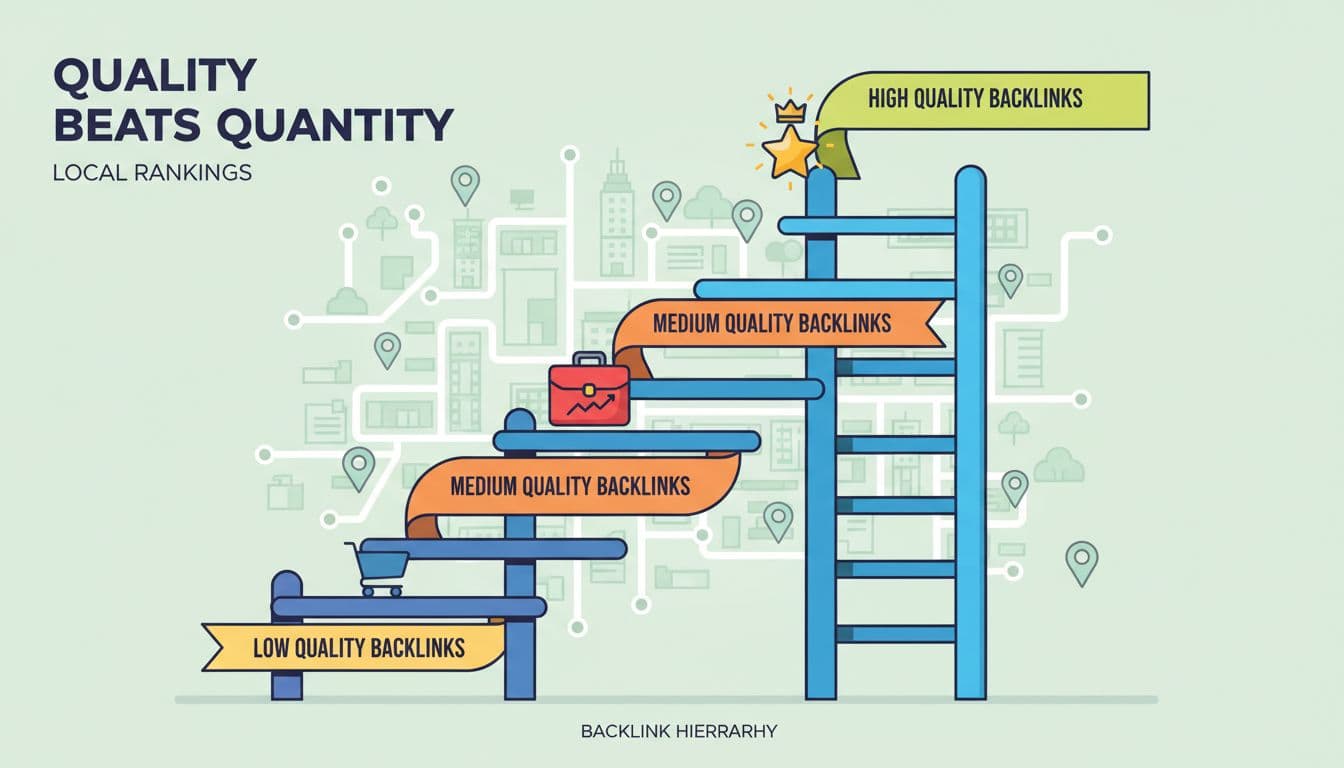
For local rankings, one trusted community link often does more than a pile of low-grade directory listings.
Google’s latest guidance still rewards links that look natural. That means relevant context, normal anchor text, and real placements. It also means avoiding private blog networks, link farms, mass swaps, and anchor text that reads like it was stuffed by a robot. If every link says “best plumber in Dallas,” you’re waving a red flag.
A useful outside reference is this local link building guide, which shows how community links often move local rankings faster than generic outreach.
There is one more catch. Your links need to point to the right page. If great backlinks keep landing on a blog post while your money page stays buried, rankings can stall. In that case, fixing page targeting matters as much as link building, and this wrong page ranking fix guide can help.
You need enough local backlinks to close the gap with the top results, then keep building at a steady pace. For planning, count unique linking sites first. That gives you a cleaner target than total backlinks.
Here is a simple benchmark table to use as a starting point, not a guarantee.
| Local market | What top competitors often show | Smart first target |
|---|---|---|
| Small town or light-competition suburb | 10 to 25 strong referring domains | 15 to 30 |
| Mid-size city, common home service niche | 25 to 60 strong referring domains | 30 to 50 |
| Large city or crowded niche | 60 to 150+ strong referring domains | 50 to 80, then reassess |
The takeaway is straightforward. Most small businesses do not need an endless pile of links. They need a focused set of local backlinks from real organizations, then a few steady wins each month.
At the same time, don’t expect links to carry everything. Reviews, your Google Business Profile, location page quality, and consistent business data still matter. That’s why a business with fewer backlinks can outrank a competitor if its local signals are cleaner. If reviews are a weak spot, these review targets for Map Pack rankings are worth checking.
This is also where performance SEO makes more sense than vanity SEO. A monthly report that says “we built 40 backlinks” means little if calls don’t rise. Results-based SEO keeps the focus where it belongs: ranking movement, lead growth, and return on spend. If a backlink plan isn’t tied to those outcomes, it’s easy to pay for activity instead of progress.
A good rule is to build, measure, and adjust every 30 to 60 days. If rankings improve and calls rise, stay the course. If nothing moves, the issue may be page relevance, reviews, or weak on-site trust, not the backlink count.
The right number of local backlinks is the number that closes your local gap. In some cities that’s a dozen strong links. In others it’s a longer climb.
What matters most is quality, relevance, and results. Real local links, pointed at the right page, paired with solid reviews and a strong profile, will beat bloated link counts almost every time.


