
Your best service page can sit on page three even when the offer is solid.
That happens on small business sites all the time. A few service pages go live, a blog starts to grow, and Google gets mixed signals about which page matters most. Traffic drifts to articles while the pages that drive calls stay weak.
Internal links for SEO help fix that. When the right pages point to the right service page, you pass context, authority, and intent. That’s often where faster ranking gains begin.
Most service pages have a hard job. They need to rank for high-buying searches, yet they’re often short, sales-focused, and light on links from other sites.
Meanwhile, blog posts, FAQs, and city pages tend to collect more impressions. They answer more questions, so Google sees them more often. If those pages never point back to your main service page, your site hides its best revenue page in plain sight.
A practical guide on internal linking for service pages explains why this matters. Related pages can pass topical relevance and page strength to the service page you want to rank.
Navigation links help, but they usually aren’t enough. A menu tells Google a page exists. A contextual link inside a paragraph tells Google how that page fits the topic.
That difference matters if you care about leads, not vanity traffic. If you pay for results instead of monthly activity, weak internal links stand out fast. Small businesses don’t need more random visits. They need rankings on pages that turn into calls, form fills, and booked jobs. That’s why a Performance SEO services approach tends to focus on money pages first.
A service page with no contextual links is easy to miss, even if it’s live in your menu.
So start with one question: which service page brings the best leads? Pick that page first. Then build links to it from pages that already have attention, trust, or close topical overlap.
Your site should guide both people and search engines toward the page that matters most. In many cases, the cleanest path looks like this: homepage to main service page, then supporting pages to that same service page, with a few links back to the parent page.
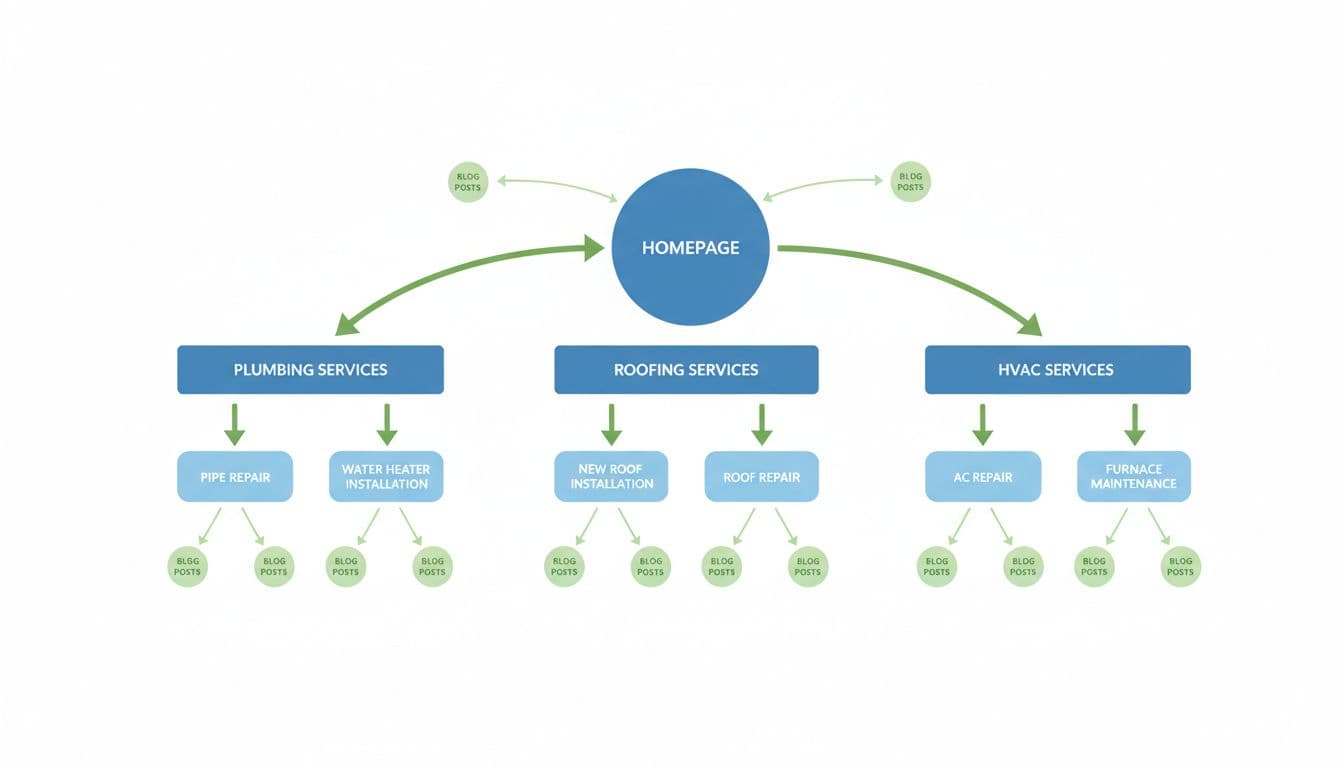
Internal links work best when your site has a clear path from broad pages to focused service pages.
Keep the structure simple. If you offer roofing, your homepage can link to Roofing Services. Then your roof repair page, metal roofing page, storm damage page, and roofing blog posts can link back to that main service page where it helps.
This quick table shows the pattern.
| Link source | Best destination | Why it helps |
|---|---|---|
| Homepage service section | Main service page | Signals site-wide importance |
| Related blog post | Matching service page | Passes relevance from info content |
| Sub-service page | Parent service page | Strengthens topic grouping |
| City page | Core service page | Connects local intent to the offer |
The takeaway is simple. Link down to focused pages, and link back up to the parent page when the relationship is clear. That builds a strong cluster instead of a pile of loose URLs.
Also, keep your best service pages close to the homepage. A recent internal linking strategy guide notes that service pages often perform best when they aren’t buried deep and when they receive a handful of contextual links from relevant pages.
The same rule shows up in Piggybank’s advice on service pages optimization. Key pages should be easy to reach from the menu and supported by internal links from related content.
Don’t force links where they don’t belong. A blog post about gutter cleaning can support a roofing page. It shouldn’t point to your emergency tree removal page unless the topic overlaps in a real way.
Once the structure is set, look for weak spots. Find service pages with only one internal link, old blog posts with traffic, and location pages that never mention the main service they support.

An audit often reveals easy wins, especially on older blog posts and local pages.
Start with pages that already get impressions. If a blog post ranks for “how much does water heater repair cost,” add a natural link to your water heater repair page. That link has more value than a random footer link on an unrelated page.
Anchor text matters, but it doesn’t need to sound stiff. Use plain phrases like “water heater repair,” “roof replacement options,” or “commercial pest control service.” Then vary them a bit. Natural anchors look better to readers, and the surrounding sentence adds context.
A recent internal linking guide recommends giving important pages contextual links from several related pages, not only from navigation. That’s a smart target for small business sites. Three to five strong supporting links can move a page more than twenty weak ones.
Also, fix orphan pages and broken links. If a service page only shows up in your sitemap, it’s harder for Google to treat it as important. If a link breaks, the signal stops there.
Finally, track the pages that pay the bills. Watch impressions, clicks, average position, calls, and form submissions. If rankings improve but leads don’t, the problem may be the page copy or offer, not the link setup. Internal linking works best when the page is clear, local proof is strong, and the next step is easy.
A strong service page can stay stuck when the rest of the site ignores it. Internal links change that by telling Google where your site puts its weight.
Most small business sites don’t need more pages. They need a better path to the pages that already make money. When related content points toward your core service pages, rankings and lead flow usually make more sense. That’s why internal links often help service pages move faster than another round of random content.


