
The wrong keyword list can waste months of work. Many small businesses go after big phrases that look good in a report, but never had a fair shot of ranking or bringing in calls.
Strong local seo keywords sit where buyer intent, location fit, and real ranking opportunity overlap. Once you know how to spot that overlap, it’s much easier to judge any SEO plan, especially one built around results instead of vague monthly activity.
Most business owners begin too broad. They write down terms like “plumber” or “dentist” and assume high volume means high value. In local search, that logic breaks fast.
A better starting point is the language people use when they want help nearby. That usually means service plus place, service plus urgency, or problem plus place. If Maps is a big source of calls in your market, your keyword choices should also support your Google Maps SEO strategy, not only your website pages.

The easiest place to find these phrases is your own business. Look at call notes, estimate requests, chat logs, reviews, and the words customers use on the phone. Then compare those phrases with Google’s autocomplete and the ideas in Search Engine Land’s guide to local keywords.
This quick table shows the difference between useful and weak starting points:
| Keyword pattern | Example | Why it matters |
|---|---|---|
| service + city | “water heater repair Tampa” | Clear local intent |
| emergency + service | “emergency locksmith Mesa” | High buying intent |
| problem + city | “roof leak repair Boise” | Matches real customer language |
| broad head term | “plumber” | Too vague and too crowded |
Use cities, towns, and neighborhoods only if you truly serve them. Fake service areas lead to weak pages and poor leads.
Pick phrases that sound like a customer ready to hire, not a marketer chasing volume.
A keyword can sound perfect and still be a bad target. That’s why the results page matters more than the tool.
Search your phrase from your service area and study the first page. If you see giant directories, national brands, and strong local companies with hundreds of reviews, you may need a narrower version first. On the other hand, weak city pages, thin service pages, and sloppy listings often mean there’s room to move.
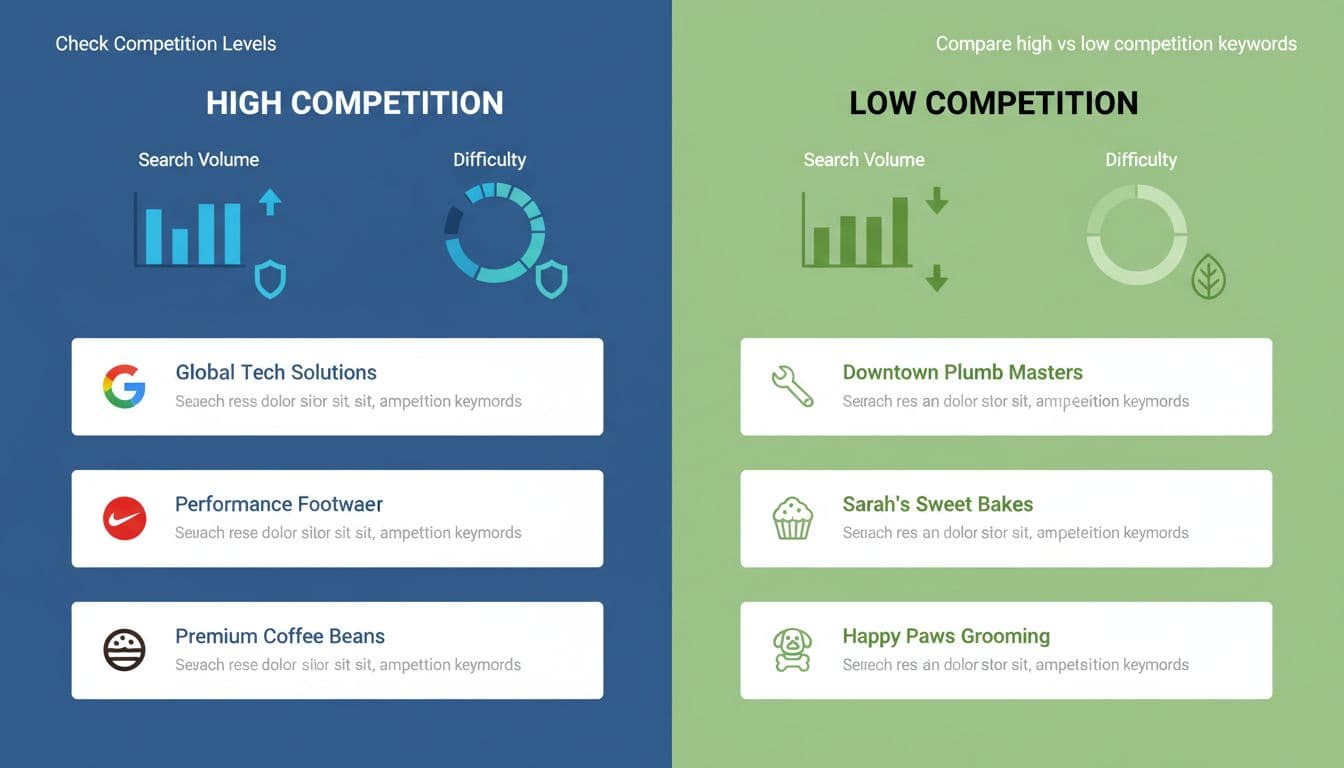
This is also where search volume can fool you. Ten searches a month from people ready to book are often worth more than 300 vague searches. A term with lower volume can still be a money term if it brings qualified calls.
Review strength matters too. In the Map Pack, trust signals can tilt the whole page. If you’re comparing two similar businesses, reviews often shape who gets the click. That’s why it helps to understand Google reviews for local ranking before you decide a keyword is “easy.”
A simple ranking filter works well here:
If the answer is “no” on two of those, move on.
This is also the point where performance-based SEO separates itself from fluff. If an agency promises page one, ask which terms they plan to target. A guarantee only means something when the keywords are realistic and tied to leads, not vanity wins.
Keep your first keyword list small. Most small businesses do better with a focused set of targets than a giant spreadsheet full of variations no one will ever track.
A practical shortlist mixes easier wins with stronger money terms. That might mean one suburb phrase, a few service-plus-city terms, and a couple of tougher main-city phrases. You want early movement, but you also want terms that can grow into steady lead flow.
Tools can help, but they should confirm demand, not invent it. A simple spreadsheet often works fine, and LocaliQ’s keyword research template is useful if you want a clean starting format. Paid tools can speed up volume checks and competitor research, and Semrush local tools can help you spot nearby keyword variations faster.
After that, group close phrases together. You don’t need separate pages for every tiny wording change. One strong page can often rank for several close terms if the service and location match.
Then track results that matter. Rankings are useful, but calls, form leads, and booked jobs tell you whether the keyword deserves to stay. Some phrases bring traffic that never converts. Others look modest but bring work every month. If you want a realistic view of pace, this guide on how long local SEO takes helps set fair expectations by keyword difficulty and market size.
The best local seo keywords are rarely the biggest terms in your niche. They’re the phrases real customers use when they need a nearby business and the current results leave room for you.
Pick terms with clear intent, honest service-area fit, and a ranking path you can explain. When the keyword list is right, every SEO promise becomes easier to judge because the result that matters is simple: more calls from searches you can truly win.


