
If your Local Service Ads are bringing in calls but not customers, it can feel like you’re paying for a phone that won’t stop ringing, but every call is the wrong person.
The good news is that most lead quality problems don’t come from “bad traffic.” They come from small setup issues that quietly invite the wrong jobs, the wrong areas, or the wrong expectations.
This guide walks you through a practical local service ads audit that focuses on one thing: getting leads you’d actually want to book.
Local Services has tightened up in the last year, and those changes affect lead quality directly.
One big shift: Google moved to a single blue Google Verified badge (replacing older “Guaranteed” and “Screened” labels) starting in late 2025. The old money-back guarantee also ended, which means trust now comes more from your profile accuracy and reviews than from a refund promise.
Google has also made the Google Business Profile connection non-negotiable. A verified, public profile with correct hours, services, and details is now required for LSAs, and Google uses that data to show your ads. If your GBP is messy, your LSAs inherit that mess.
For official guidance, keep Google’s documentation bookmarked, especially Local Services Ads overview and Improve your Local Services Ads performance.
A local service ads audit goes faster when you’re clear on what you’re trying to attract. Otherwise, you’ll chase volume and wonder why revenue doesn’t follow.
A “top-quality” lead usually matches four things:
A quick reality check helps: look at your last 20 LSA leads and mark which ones became estimates, which became booked jobs, and which were dead ends. That’s your baseline.
LSAs are built on trust. If anything in your profile looks inconsistent, Google may still show you, but you’ll often attract confused shoppers.
During your audit, confirm these match everywhere (LSA profile, Google Business Profile, website):
If you want a deeper overview of how LSAs work and what Google looks at, Google Local Services Ads 101 is a solid plain-English reference.
Service area errors are the fastest way to buy bad leads. If you include entire counties “just in case,” you’ll get calls from the edges, then spend time explaining you don’t go there.
Set your service areas to what you can reliably handle, including travel time, staffing, and response speed. In many markets, smaller coverage also improves lead quality because you show more often to people near you.
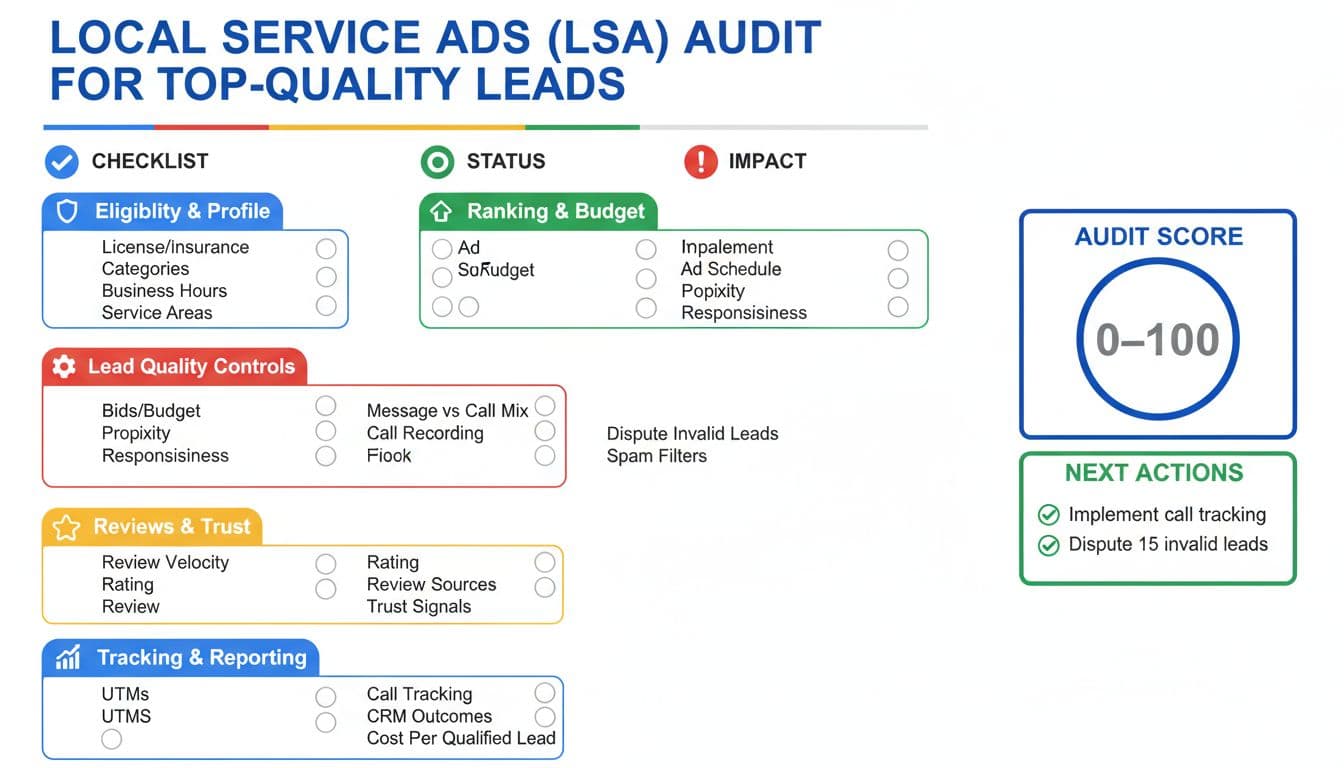
If you want a second checklist to compare against yours, this LSA audit checklist guide is useful for catching basics you might overlook.
It’s tempting to think budget only affects how many leads you get. It also affects which leads you get.
LSAs reward responsiveness. If you’re showing after hours and missing calls, you can train the system that you’re slow, and you’ll also rack up low-intent voicemail leads.
Audit your last two weeks:
If you can’t staff the phones all day, narrow your schedule to when you can respond quickly, then expand as you build capacity.
Google often prices message leads lower than calls, but they tend to require faster follow-up and clearer screening. If your team is strong on texting back within minutes, messages can bring excellent leads. If messages sit for hours, they turn into “ghost leads.”
Call recording is your truth serum. It tells you if the lead was wrong-service, out-of-area, spam, or simply handled poorly.
Listen to a sample of 10 calls and write down patterns. If you hear “Do you do free estimates?” over and over, your profile and service list might be too broad, or your team might need a tighter script.
Google’s credit rules have gotten stricter, so your best defense is prevention (tight service areas, correct job types). Still, you should dispute truly invalid leads quickly and consistently.
If you’re also running pay-for-performance marketing, you already know the value of clean definitions and evidence. A documented workflow keeps things fair and fast, here’s a helpful reference on a lead dispute process.
You can’t add negative keywords in LSAs like standard Google Ads. Your control is in what you claim you do.
Be honest about what you don’t do, then remove or narrow those job types. If you don’t want tiny repair jobs, don’t advertise the micro-service that attracts them.
Your reviews aren’t just social proof, they’re part of how LSAs win clicks. People scan stars like they scan a menu. If the rating is low or the review count is thin, they keep scrolling.
Audit these two things:
A simple approach works: ask every happy customer, send the link, and follow up once. Consistency beats big bursts.
If you need help getting the whole LSA engine tuned, including review strategy and category targeting, Local Service Ads Management Services can fill in gaps without locking you into long contracts.

If you only track “leads,” LSAs can trick you with volume. Track outcomes, even if it’s simple.
Here’s a clean way to score lead quality in your audit:
| Metric | What to track | Why it matters |
|---|---|---|
| Qualified lead rate | Qualified leads / total leads | Shows real lead quality |
| Booking rate | Booked jobs / qualified leads | Shows sales process health |
| Cost per qualified lead | Spend / qualified leads | Better than cost per lead |
| Missed lead rate | Missed calls and late replies | Impacts ranking and waste |
| Service mismatch rate | Wrong job or wrong area leads | Signals setup issues |
This is also where results-based marketing makes sense. When you measure the right outcomes, you can pay for performance with confidence, instead of paying a flat fee while guessing what worked. If you want to see how that kind of pricing is structured, check Transparent SEO & PPC Pricing.
A strong local service ads audit is less about tweaks and more about alignment, your services, your service area, your responsiveness, and your tracking all need to agree with each other.
Start by tightening what you offer and where you offer it, then back it up with fast response times, steady reviews, and outcome-based reporting. Do that, and LSAs stop feeling like a slot machine and start feeling like a predictable lead channel.
If you want a second set of eyes on your setup, or you’d rather only pay when results show up, review https://www.piggybankseo.com/local-service-ads and decide if a performance-first approach fits your goals.


