
Signing a pay-for-performance SEO deal without a lead estimate is like buying a truck without checking the mileage. The offer might be fair, but you’re guessing.
SEO forecasting fixes that. It turns “we’ll rank you” into a simple model that estimates clicks, leads, and new customers, based on search volume, likely ranks, and your real close rate.
This post shows a practical way to forecast leads before you commit, plus the questions that keep a “results-based” offer honest.
In pay-for-performance SEO, you usually pay when agreed outcomes happen (often page-1 rankings, sometimes leads). That model can lower risk, but only if the targets are valuable.
Forecasting is the step that answers: “If we hit page 1 for these keywords, how many leads should I expect?”
It’s not a promise. It’s a range.
Why a range? Because rankings don’t produce the same click volume for every business. A map pack can steal clicks. A big brand can pull attention. Even your reviews can change click-through rate.
If you want a quick overview of how pricing models can differ (and where the traps can be), skim Pay for Performance SEO: Why the Reality Is Different.
For a results-based model done the right way, the incentives stay aligned and the math is transparent. That’s the point behind the Advantages of Pay for Performance SEO.
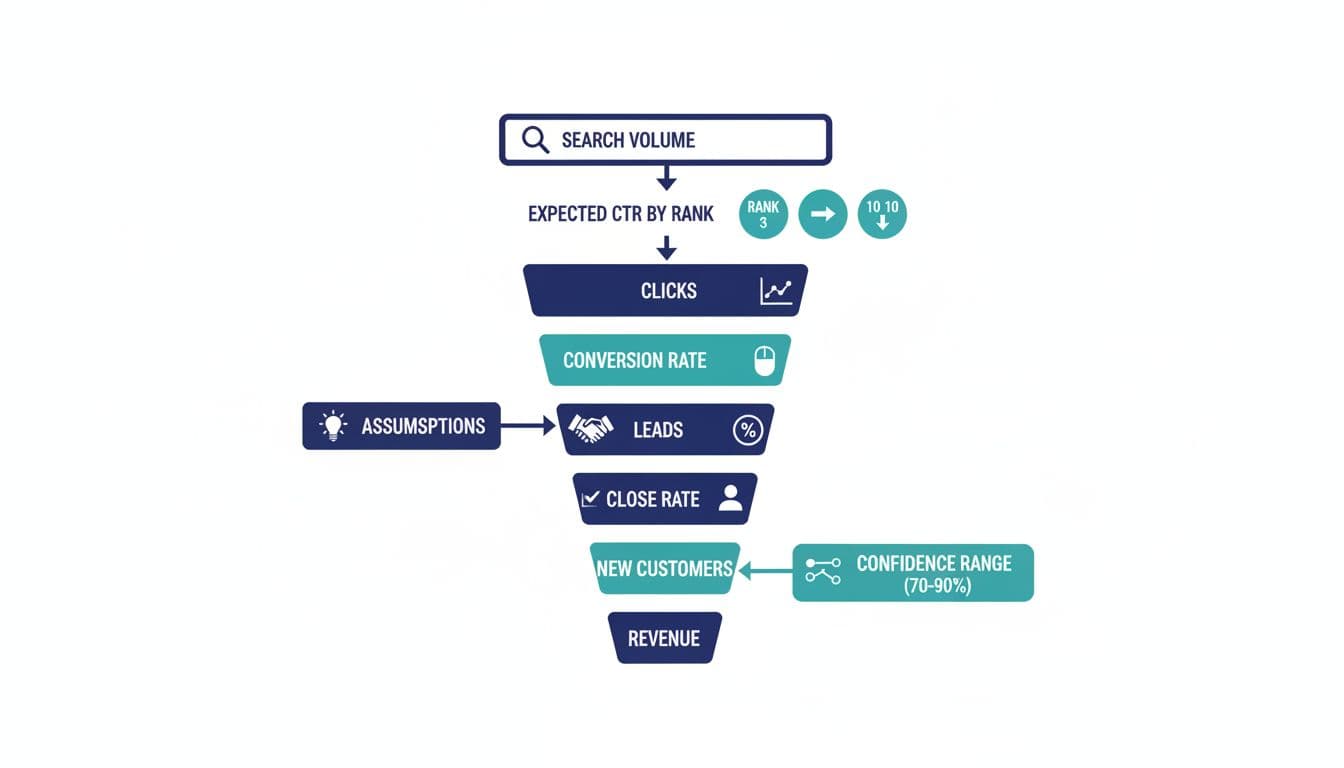
A solid forecast is just a conversion chain with clear assumptions:
Search Volume → Expected CTR by Rank → Clicks → Conversion Rate → Leads → Close Rate → New Customers → Revenue
Here’s what each part means in plain English:
Search volume: How many times people search your target terms per month in your service area.
CTR by rank: If you rank #3, #5, or #10, what share of searchers will click you? This changes by query type and what shows on the results page. (If you want a practical walkthrough of rank-based assumptions, Backlinko’s SEO forecasting guide is a helpful reference.)
Clicks: Search volume × CTR.
Conversion rate (CVR): Of those clicks, how many become leads (calls, forms, chats, bookings).
Close rate: Of those leads, how many become paying customers.
Revenue: New customers × average job value (or first-year value, for recurring services).
When a pay-for-performance SEO company says “we guarantee rankings,” your forecast is what tells you if those rankings are worth paying for.
Most bad forecasts aren’t bad math, they’re bad inputs. If you’re a local business owner, these are the inputs that matter most.
A keyword is only forecast-worthy if it has:
A common performance SEO trick is loading the agreement with ultra-low-volume terms just to “hit page 1” fast. Your forecast should separate “rankable” from “revenue-ready.”
Ask for three rank scenarios for each keyword group:
Then attach a CTR range to each scenario. This keeps everyone honest because you’re planning for outcomes, not hoping for the best.
Recent forecasting playbooks also push scenario models because SERPs keep changing with more modules and AI-style answers. SEO Sherpa’s SEO forecasting guide is a good example of that scenario-first thinking.
Close rate is where small business forecasts often fall apart.
If you have data, use it:
If you don’t, use a proxy from the last 60 to 90 days:
Even a rough close rate is better than a made-up number. It also helps you set fair pricing in a pay-per-lead or pay-per-result plan.
If the model is performance-based, definitions matter. A “lead” can mean a 2-minute call with service intent, or it can mean any tracked call, even wrong numbers.
Before you sign, make sure you have a fast way to review lead quality, including disputes. Here’s a practical example of a pay-for-performance SEO lead dispute process that keeps billing clean and avoids month-end arguments.
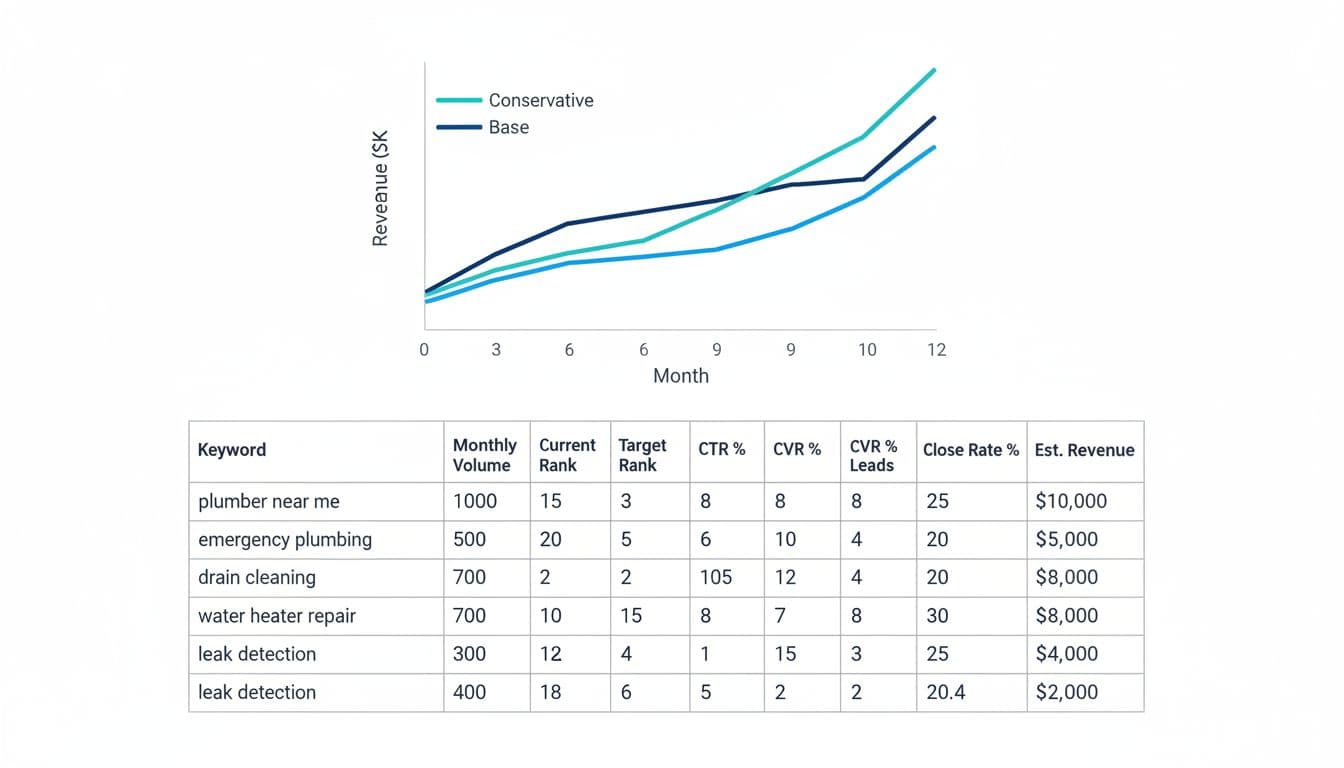
Let’s say you’re a plumber targeting five core service keywords in one metro area.
Now the math:
Is that perfect? No. It’s useful.
It gives you a range you can sanity-check against staffing, booking capacity, and what you’re willing to pay per lead or per ranking.
If you want the relationship to work long-term, you also want the “rules of the road” that keep the performance model stable. This checklist of key considerations for performance-based SEO is a good place to start.
A forecast can be used to build trust, or to hide a weak offer. These are the red flags that matter:
Forecasts built on “national volume” for a local business: If you serve one county, your forecast should reflect that.
CTR assumptions that ignore the SERP: Map packs, ads, and big directories can change click share fast.
No separation of branded vs non-branded keywords: Ranking for your business name shouldn’t be the win that drives your billing.
Close rate magically improves in the spreadsheet: SEO can improve lead quality over time, but your close rate still depends on sales follow-up, speed-to-lead, and pricing.
No plan for lead approval: If you can’t review leads quickly, you’ll argue about invoices later.
Pay-for-performance SEO can be a fair deal, but only when the targets produce business, not just rankings. SEO forecasting gives you a clear way to estimate leads before you sign, using search volume, rank scenarios, conversion rates, and your close rate.
Ask for ranges, ask for assumptions, and ask for lead definitions in writing. When the math is clear up front, the performance model feels simple, and the results feel real.


