
When the phone rings at 2:13 a.m., it’s not a “maybe next week” kind of customer. It’s a “water’s on the floor right now” customer. That’s why pay for performance SEO gets tricky for service businesses that do both emergency and scheduled work.
If every lead “counts the same,” you’ll either overpay for low-intent tire-kickers or under-invest in the calls that keep your crew busy and profitable. The fix is simple, set different lead values for emergency and non-emergency work, then track them with rules everyone agrees on.
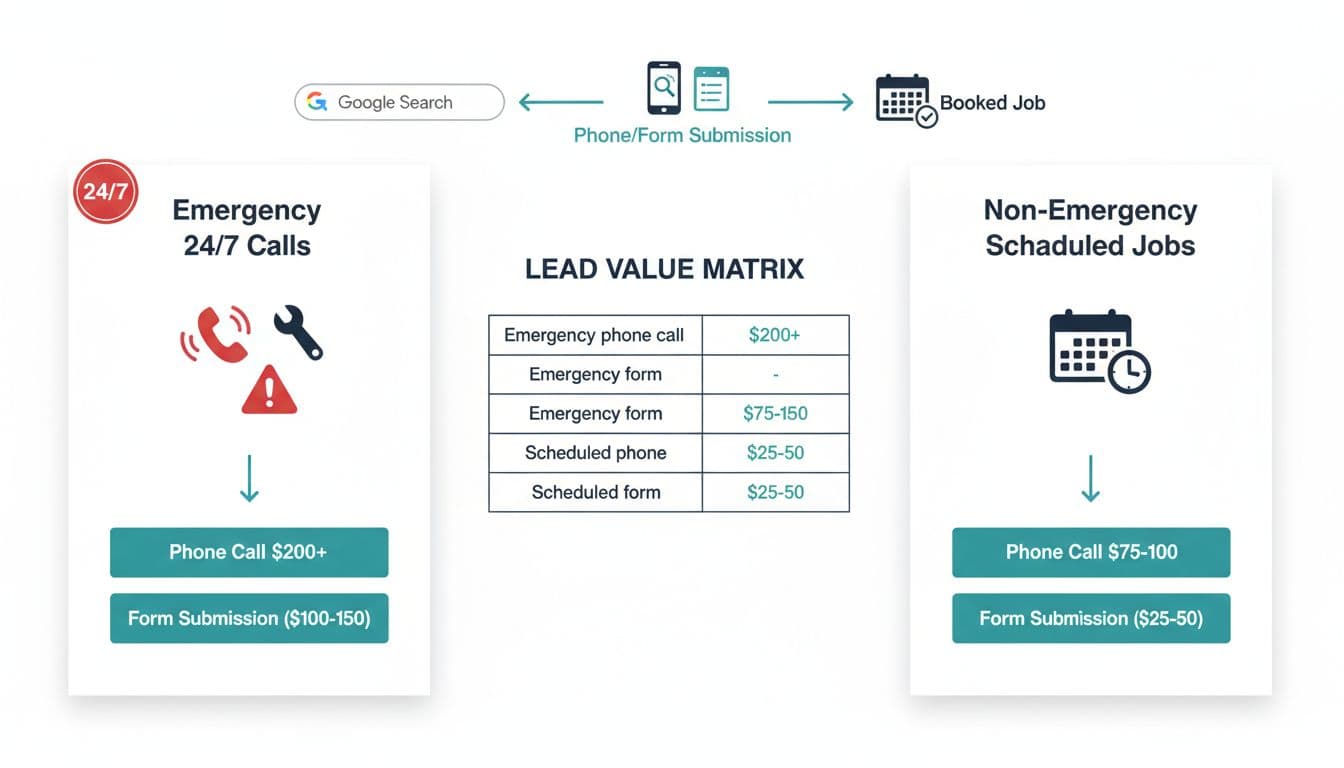
Emergency leads tend to be more valuable for three reasons: speed, intent, and urgency. Someone searching “emergency plumber near me” or “24-hour locksmith” usually wants a fast answer, and they’re ready to book if you sound competent and pick up the phone.
Scheduled work is different. A “water heater quote” or “drain cleaning appointment” search can still be high quality, but it often comes with shopping behavior: comparing prices, reading reviews, asking for availability next Tuesday. It’s not worse, it’s just not the same moment of need.
Here’s what changes your lead value in real life:
This is also where pay for performance models need to be handled carefully. Some critiques point out that performance pricing can get messy if “results” aren’t defined clearly. The concerns in this discussion of pay-for-performance SEO risks are a good reminder to put the rules in writing before anyone spends a dollar.
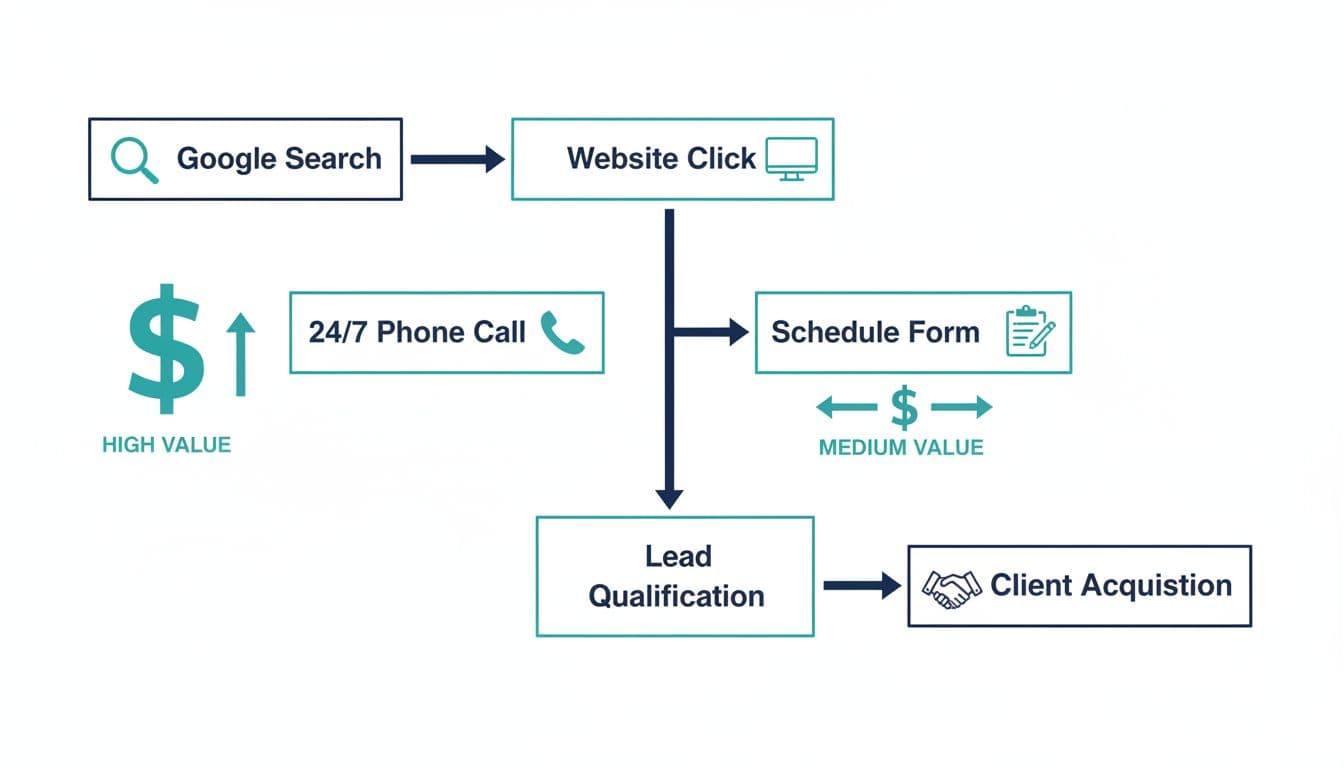
Lead values shouldn’t be guesses or “what feels fair.” A solid starting point is a basic equation:
Lead value = (expected gross profit × close rate) minus lead handling costs
You don’t need perfect data. You need reasonable inputs, then you tighten them after 30 to 60 days.
Example (easy numbers):
Now compare scheduled:
Next, split by action type. Calls usually beat forms for emergencies (people want answers now). Forms can be fine for scheduled work, but they often include more “price-only” shoppers.
A clean starter matrix looks like this:
| Lead type | What it means | Example lead value |
|---|---|---|
| Emergency phone call | Qualified 24/7 service request, service area match | $200+ |
| Emergency form | Urgent request, confirmed phone number, reachable | $100 to $150 |
| Scheduled phone call | Books estimate or appointment within normal hours | $75 to $100 |
| Scheduled form | Requests scheduling or pricing, not urgent | $25 to $50 |
One more reality check: if you also run paid channels, you already know Google charges differently based on intent. For context on lead-based pricing in local service ads, see this overview of Google Local Service Ads for plumbers. Even if you don’t use LSAs, it’s a helpful comparison point for “what a lead costs” when urgency is high.
Different lead values only work if tracking is clean. Otherwise, every month turns into an argument about what counted.
Start by defining “approved” leads in plain language. For emergency and scheduled, the definitions should be different.
Emergency lead approval rules (examples):
Scheduled lead approval rules (examples):
Then get serious about plumbing the data (no pun intended):
Call tracking and recordings: You should be able to listen to disputed leads. It protects both sides.
Disposition tags: “Booked,” “Not service area,” “Price shopper,” “Spam,” “No answer.” One click after each lead changes everything.
Separate landing experiences: If you advertise 24/7, route emergency traffic to a page that prioritizes calling, and scheduled traffic to a calendar-first page.
After-hours routing: If you can’t answer at night, set expectations. Emergency SEO will still work, but your emergency lead value should be lower until coverage improves.
This is where a results-based partner can stand out. For example, Piggybank Internet Marketing positions performance campaigns around clear outcomes (including fast page 1 visibility goals and no long contracts), which only works when lead definitions, tracking, and reporting are tight.
Also, don’t treat SEO and ads like rivals. Many service businesses use ads to fill gaps while SEO grows, or to cover after-hours surges. If you’re weighing the mix, this comparison of local SEO vs Google Ads is a useful framework.
If you do emergency and scheduled work, one flat lead price won’t reflect your business. Set separate values for 24/7 calls and scheduled jobs, then split again by calls versus forms. Track outcomes, agree on approval rules, and adjust based on booked profit, not feelings.
The best part is what happens next: pricing becomes calmer, marketing decisions get easier, and you can scale what actually pays you back.


