
If you run more than one service line, roofing plus HVAC plus plumbing, you already know the problem. A “lead” isn’t just a lead. A $25,000 roof replacement call is not the same as a $189 drain clearing.
That’s why pay for performance SEO gets tricky for multi-service contractors. You want a fair deal (pay when results show up), but you also need clean tracking and pricing by service line, without someone emailing you a spreadsheet that turns into an argument.
Here’s how to price it and track it, with clear rules, service-level reporting, and a setup that can scale past your first location.

The fastest way a performance plan goes sideways is when everyone has a different definition of “success.” One side is looking at rankings, the other is looking at booked jobs, and nobody agrees on what a “qualified lead” is.
In 2026, more contractor programs are moving away from “pay for rankings” alone and toward pay for tracked leads by service line, because that’s what matches cash flow. When the phones ring, you can hire, schedule, and buy materials. When a keyword moves from position 12 to 6, it feels nice, but it doesn’t cover payroll.
Multi-service businesses also run into these common gaps:
If you’re evaluating whether performance-based pricing fits your business, the Benefits of Pay‑for‑Performance SEO are real, but only when tracking and definitions are locked down first.
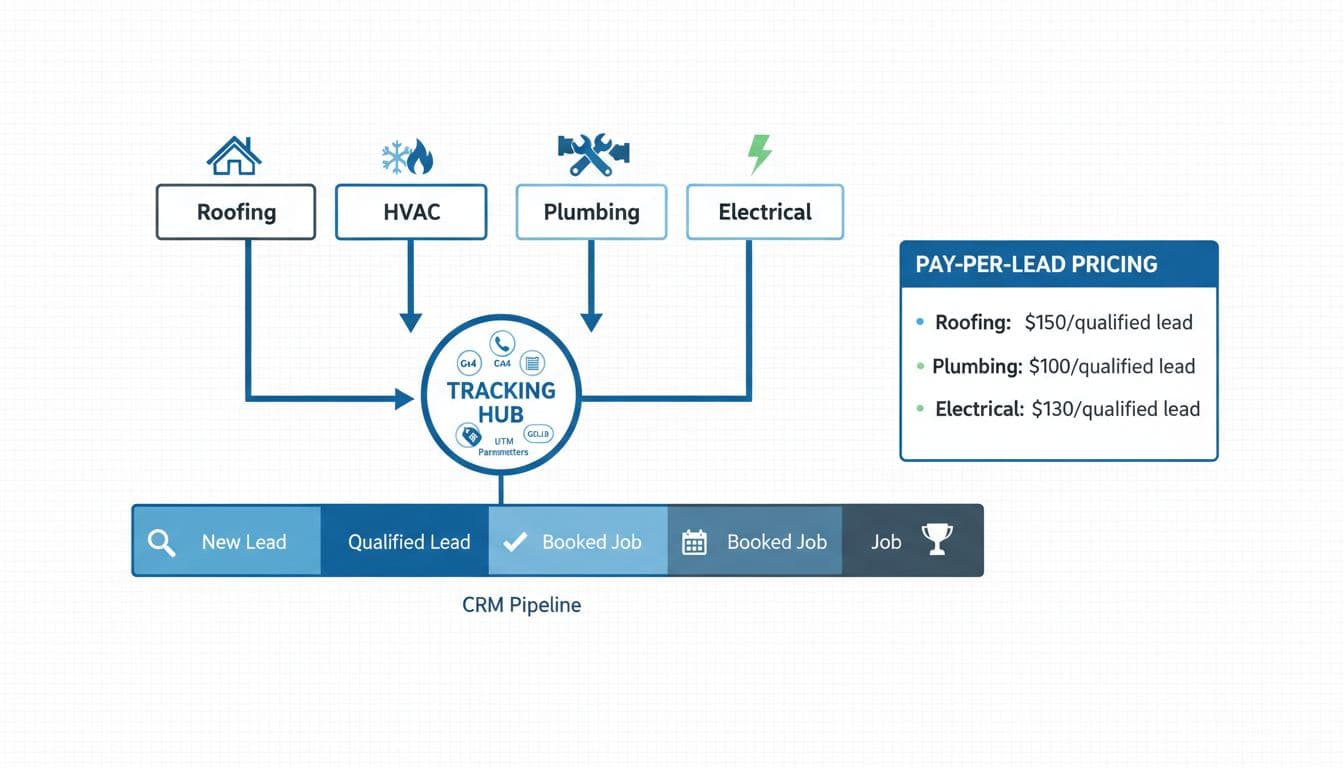
Think of tracking like a jobsite chain of custody. If you can’t show where a material came from, someone eats the cost. Lead attribution works the same way.
To track by service line cleanly, you need three things: service-specific entry points, a tracking layer, and a CRM (or at least a pipeline board) that stores the service tag.
1) Service-line landing pages (one job, one page).
Create pages that match what people actually search, like “Roof Repair in [City]” and “AC Repair in [City].” Each page is mapped to a single service line. This is where most “no spreadsheet” setups start.
2) Call tracking that knows the page.
Use dynamic number insertion so calls can be tied to the landing page. That page equals the service line. You don’t need a dozen numbers forever, you just need the system to record source and page path.
3) Form tracking with a hidden service field.
Add a hidden field that passes “roofing” or “plumbing” based on the page the form was submitted on. The lead arrives already labeled.
4) GA4 events plus CRM tagging.
GA4 tracks the event, your CRM stores the service line and status (new, qualified, booked, completed). If you want an extra layer of reliability, offline conversion import (sending booked or completed jobs back into analytics) helps confirm what actually turned into revenue.
For a practical checklist of what to confirm before a campaign goes live, use this Performance SEO success checklist.
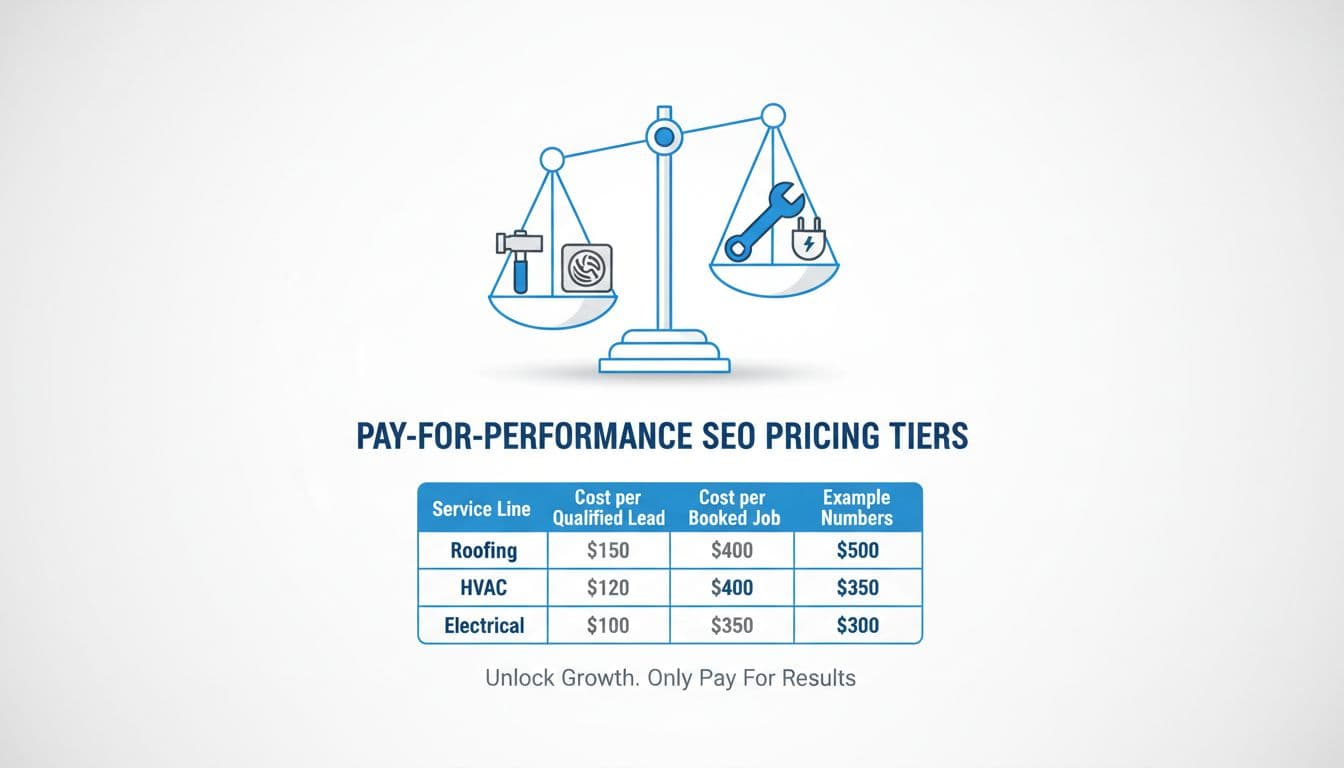
A fair performance plan is like bidding a multi-trade project. You wouldn’t price electrical, plumbing, and roofing with the same labor rate. Your marketing shouldn’t either.
If you want a quick scan of common performance pricing structures, this breakdown on how performance-based SEO models charge is a useful reference.
Here’s a simple example structure you can copy and adjust:
| Service line | Billing unit | Example rate | What “qualified” means (plain-English) |
|---|---|---|---|
| Roofing | Qualified lead | $150 | In-area, wants roofing work, valid contact, not a job seeker |
| HVAC | Qualified lead | $120 | Service or install request, in service area, real callback number |
| Plumbing | Qualified lead | $100 | Same-day need or clear request, not a wrong department |
| Electrical | Qualified lead | $130 | Residential electrical request, not a parts question |
Good service-line pricing usually includes:
Monthly cap per service line: Prevents runaway billing during a spike.
Floor expectation: A realistic minimum target so the vendor can staff properly.
One-time setup fee (optional): Many contractor plans use a smaller setup fee for tracking and landing pages, then shift to performance billing. If you’re comparing options, this SEO pricing in 2026 guide helps explain why upfront costs vary so widely.
Performance billing only works when the invoice matches what your office team experienced. The easiest way to get there is to define outcomes before the first lead arrives.
1) One lead equals one unique contact in a set window.
Example: same phone number within 7 days counts once, even if they call twice and submit a form.
2) A qualified lead must match service and location.
If you don’t offer water heater installs, that can’t be billed under plumbing. If you don’t serve the ZIP code, it can’t be billed at all.
3) Spam filters aren’t optional.
Bot forms, robocalls, and “students looking for training” should be excluded automatically when possible, and credited quickly when they slip through.
4) Disputes need a fast, boring process.
Not emotional, not a month later, and not buried in email threads. Use a simple workflow (review, approve, reject) with call recordings or form details as evidence. This Pay‑for‑Performance SEO Lead Dispute Process is a solid model for keeping approvals fast and consistent.
To keep everyone honest, tie billing to what’s trackable: call recordings, form timestamps, landing page paths, and CRM status.
Pay for performance SEO can be a great fit for multi-service contractors, but only if you price and track by service line. When each division has its own landing pages, labels, and billing rules, the reporting becomes something you can trust, not something you argue about.
If your current setup needs “one more spreadsheet” to explain where leads came from, that’s a sign the tracking layer is the real project. Fix that first, then performance pricing gets simple.


