
If you’ve ever looked at an SEO invoice and thought, “Wait, what am I paying for this month?”, you’re not alone. Traditional SEO reporting can feel like a thick novel when all you really want is a receipt and a reason.
A pay-for-performance SEO scorecard fixes that by putting the work, the proof, and the math on one page. It shows what you owe, exactly why you owe it, and where the numbers came from. No guesswork, no “trust us,” no mystery line items.
Below is a practical SEO scorecard template concept you can use each month, whether you’re working with a results-based agency or trying to hold your current vendor to a higher standard.

Pay-for-performance sounds simple: you pay when results show up. But “results” can mean different things to different people. Rankings? Calls? Form fills? Sales? If you don’t define it, you’ll eventually debate it.
A one-page scorecard keeps everyone honest because it forces three things to be clear:
1) What outcomes count
If your agreement is “pay after you rank,” then the scorecard should show which keywords hit page 1, when they got there, and whether they stayed there. If your agreement is pay-per-lead, it should show what a “qualified lead” means.
2) What proof is acceptable
Good scorecards point to the source of truth, like Google Search Console for organic clicks, GA4 for sessions and conversions, and your CRM for sales outcomes. If your vendor can’t connect metrics to real sources, you’re paying for vibes.
3) What the math is
This is the part most SEO reports avoid. A scorecard doesn’t. It spells out the pricing rules, any caps, any credits, and the final amount owed.
If you want a solid baseline for what a trustworthy report should include, this guide on creating an SEO report that wins trust is a helpful reference point. And if you’re weighing whether results-based SEO is a fit, the benefits of pay-for-performance SEO are easier to evaluate when the billing is tied to a clean scorecard.
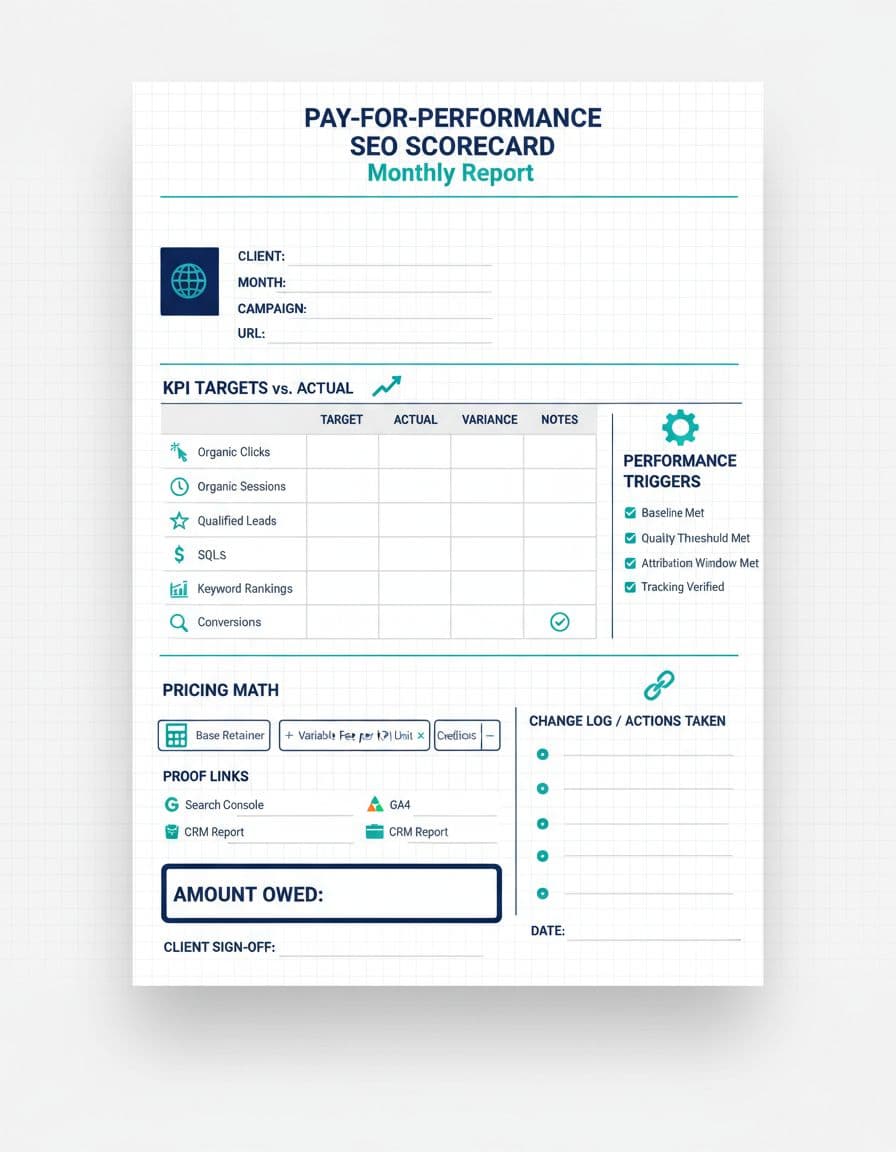
Think of this SEO scorecard template like a restaurant check that itemizes the meal, not just a total at the bottom. It should fit on one page and be readable in under two minutes.
Here’s what belongs on it.
Keep it basic: client name, month, campaign, target location (if local), and the website URL. It sounds obvious, but it prevents mistakes when you run multiple locations or service lines.
This is your scoreboard. Use a simple table with targets, actuals, variance, and notes. Choose KPIs that match what you actually care about, not what’s easy to inflate.
Common rows that work well for small businesses:
If you need inspiration for keeping KPI reporting simple, these KPI scorecard examples show how marketers keep “at a glance” dashboards readable.
This is the guardrail section. It answers: did the campaign meet the minimum conditions to bill this month?
Examples of triggers:
This section should show the formula, not just the result. It’s also where you handle caps, floors, and credits.
Here’s a simple example structure:
| Item | Example rule | Example amount |
|---|---|---|
| Base retainer | Only after baseline is met | $499 |
| Variable fee | $50 per approved qualified lead | $300 |
| Credits | Disputed or duplicate leads | -$50 |
| Amount owed | Base + variable + credits | $749 |
If you’re comparing performance models, this is where a pricing page should match the scorecard. A clear example is pay-after-ranking SEO pricing details, which makes it easier to align expectations before month one.
A scorecard isn’t complete without:
Most billing fights don’t happen because someone’s dishonest. They happen because definitions were fuzzy. Your scorecard should make disputes rare and fast.
Start by defining one billable unit.
For many small businesses, that’s an “approved qualified lead,” not raw traffic. A qualified lead might mean: in your service area, requesting a service you offer, with real contact info, and not spam.
Then set an attribution rule you can live with.
SEO is rarely the only touchpoint. Someone might find you on Google, come back via a branded search, then call after seeing a review. That’s normal. What matters is agreeing on how you credit it.
A practical approach:
If pay-for-performance billing includes lead approvals, it helps to have a documented workflow. Here’s a clean reference for a Review-Approve-Reject lead process, which is exactly the kind of policy that belongs behind your scorecard.
Also, make sure tracking is stable. If GA4 tags break or call tracking numbers get removed, the scorecard should show “tracking not verified,” and billing should pause until it’s fixed.
In January 2026, small business SEO isn’t just “rank a page and wait.” Search results are more crowded, and more answers show up directly inside AI tools and search features. That makes proof and trust even more important than pretty graphs.
A strong scorecard is “future-proof” when it includes:
For local businesses, the strategy side matters as much as the tracking. This complete guide to small business local SEO pairs well with a scorecard because it helps you choose the right KPIs in the first place.
And if your growth plan includes paid traffic alongside SEO, it’s easier to compare lead quality when reporting is consistent across channels, including Google Ads management with performance-based pricing.
A one-page SEO scorecard template turns monthly SEO billing into something that feels fair: results, proof, and pricing, all in one place. It’s the difference between “trust me” and “here’s the receipt.”
If you’re paying for SEO today, ask for a scorecard like this next month, or build your own and require your vendor to fill it in. When the rules are clear and the math is visible, you can focus on growth instead of debating invoices.


