
If you’ve ever had a “good problem” week where leads poured in, you know it can turn bad fast. Phones ring, forms stack up, estimates fall behind, and suddenly the leads you paid for start going cold.
That’s exactly why SEO lead caps matter in a performance-based model. A cap isn’t about slowing growth, it’s about keeping your sales and ops teams operating like a well-run kitchen, not a fire drill.
This guide breaks down practical weekly and monthly cap settings, plus how to keep momentum even when you hit the limit.
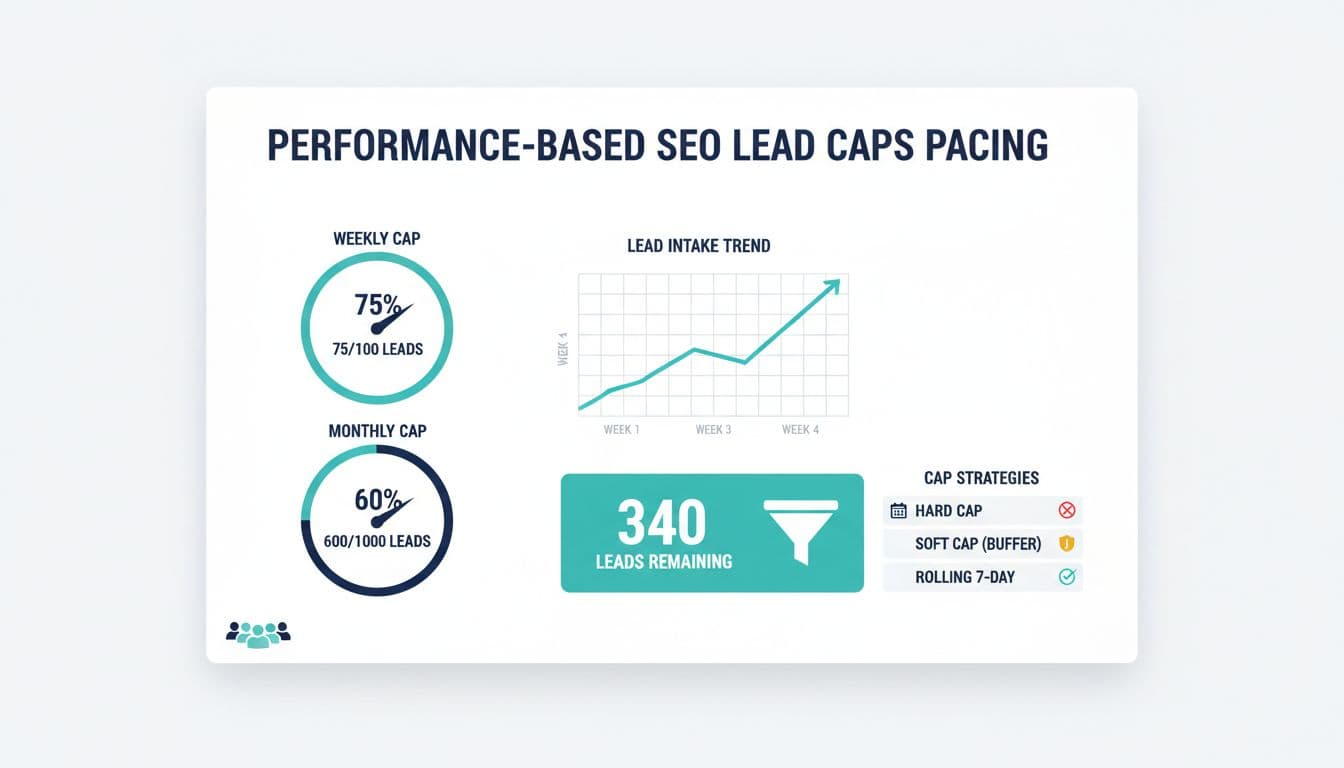
In performance-based SEO, the “product” isn’t a report or a rank tracker. It’s outcomes. That often means leads, calls, booked jobs, or a set number of page-1 keywords before billing starts.
Lead caps put a safety rail around that success. They define the maximum number of billable or accepted leads in a time window (weekly, monthly, or both). Done right, caps protect three things:
They also remove tension from the relationship. When rules are clear, pricing stays fair, and nobody feels punished for growth. If you want a quick primer on how performance-based pricing is structured across the industry, see how agencies charge under performance-based models.
Most cap problems start with a number that “sounds reasonable,” instead of a number that matches how your business works.
Start with three inputs:
Think in minutes and hours, not vibes. If your promise is “we call back within 15 minutes,” your cap must respect that.
A simple way to estimate weekly handling capacity:
If you close 30 percent of qualified leads, then 10 qualified leads should produce about 3 new customers. The cap should support your delivery capacity, not just your sales ambition.
This is the part people skip. If you can only complete 8 jobs a week, don’t set a cap that could generate 20 new customers. That’s how reviews suffer and churn starts.
If you’re evaluating a vendor or a results-based plan, it helps to compare against a checklist of what “success” should include beyond rankings. This post on key factors for performance-based SEO success lays out the big operational pieces.

Weekly caps are for protecting your “today” performance. They’re especially useful for small teams because one busy day can wreck the whole week’s follow-up.
A good weekly cap is usually tied to two things: response-time goals and appointment availability. If you can only book 12 estimates a week, then a weekly cap of 12 qualified leads is a sensible starting point.
Hard cap: Leads stop counting after you hit the number. Clean and simple, but it can create stop-start patterns.
Soft cap with buffer: Example, cap is 15 leads, but you allow 3 extra “buffer leads” if they’re high intent (same-day service, emergency, strong fit). This protects revenue without opening floodgates.
Rolling 7-day cap: Instead of resetting every Monday, the cap is always the last 7 days. This smooths spikes and avoids the “Friday panic” where you slam into a limit.
If you want a deeper look at how performance agreements and payout logic vary, performance-based pay models for SEO is a useful read.
Monthly caps are where you protect the business, not just the inbox. They help you plan labor, inventory, scheduling, and revenue targets.
A clean way to set a monthly cap is to work backward:
Example: if you can fulfill 30 jobs a month and close 35 percent, you need about 86 qualified leads to fill the calendar. You might set a cap at 80 to protect response time, then use a buffer for the last 5 to 10 if they’re premium jobs.
When people say caps kill momentum, what they usually mean is they stop marketing entirely. You don’t need to do that.
Instead, keep SEO work moving while controlling intake:
For more context on why many small businesses like results-based pricing in the first place, see benefits of pay-for-performance SEO.
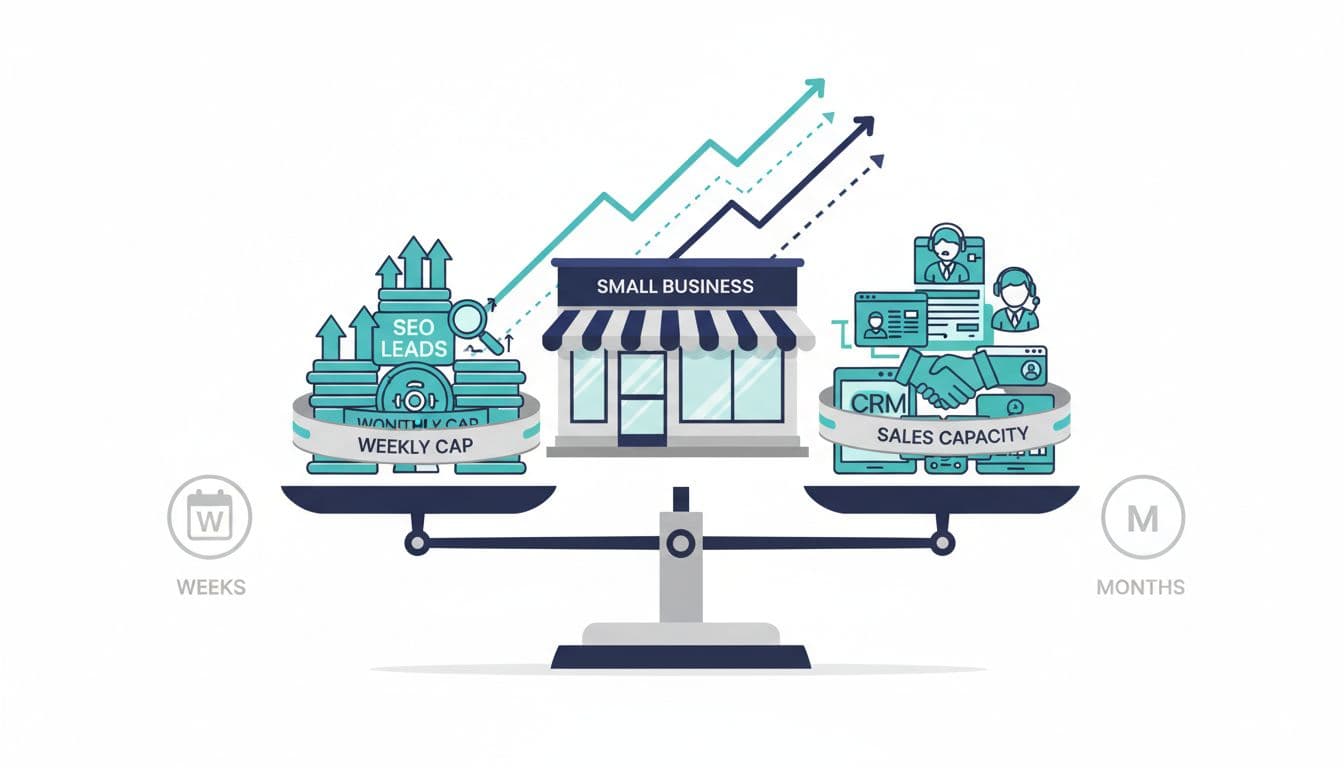
Caps work best when you also define what counts as a lead. Otherwise, you hit the cap with junk and everyone’s frustrated.
At minimum, align on:
A fast dispute process also matters, because disputes left to simmer turn into billing fights. This lead dispute workflow guide is a solid model for reviewing and approving or rejecting leads quickly.
Setting the cap too low, too early: If you cap at 5 leads a month, you’ll never get enough data to improve conversions. Fix: start with a cap that creates at least 15 to 30 conversations monthly, then tighten.
Only using a hard cap: It creates “on-off” lead flow. Fix: add a buffer or use rolling 7-day caps.
No plan for overflow: You hit the cap and lose demand. Fix: waitlist, schedule links, or a “next-available” promise.
Ignoring seasonality: Home services and local businesses aren’t steady year-round. Fix: set different caps for busy and slow months.
Treating SEO like paid ads: Turning everything off can stall progress. Fix: keep SEO work consistent, control intake with scheduling and filters.
Lead caps aren’t a brake, they’re a steering wheel. When SEO lead caps match your real capacity, you get steady growth without burned-out staff or missed calls. Set weekly caps to protect response time, set monthly caps to protect delivery, and add clear lead rules so the cap feels fair. If you’re not sure where to start, pick a conservative cap, measure for two weeks, then adjust in small steps until the lead flow feels steady and profitable.


