
If you’re paying for SEO based on results, you can’t run the business on “monthly reports.” You need a real-time SEO dashboard that tells you, right now, what’s turning into calls, booked jobs, and revenue.
Home services move fast. A pipe bursts at 9pm, your phone rings, and that job is won or lost in minutes. The same speed should apply to your marketing data. When performance pricing is on the line, the dashboard isn’t a nice-to-have, it’s the scoreboard everyone trusts.
This guide breaks down what to track, where the data comes from, and how to build a dashboard that keeps lead quality, billing, and growth on the same page.
Traditional SEO reporting often answers the wrong question: “Did traffic go up?” In pay-for-performance SEO, the real question is, “Did we create billable outcomes that match the agreement?”
A real-time dashboard does three practical things:
It reduces arguments. When the data is shared, updated frequently, and tied to clear definitions, disputes drop.
It protects cash flow. You can spot drops early (rankings, calls, or answer rate) instead of finding out after a slow week.
It forces focus. Rankings matter, but rankings that don’t produce calls are just trivia.
If you’ve ever stared at a report thinking, “Okay, but did we actually get any jobs?” this is the fix.
Before you connect tools, agree on what each KPI means, especially what counts as a lead in a pay-for-performance setup.
For most home service companies, the biggest disconnect is “lead” vs “qualified lead.” A missed call at 2am and a booked water-heater install are not the same thing.
At minimum, define:
If you offer performance-based billing, build the dispute workflow into the dashboard from day one. Here’s a clear example of a documented process that keeps approvals and rejections consistent: Lead Dispute Process for Pay‑for‑Performance SEO.
The goal is not “track everything.” It’s “track what moves money.”
| KPI | What it means | Where it comes from | Why it matters for performance pricing |
|---|---|---|---|
| Leads | All tracked calls + forms | Call tracking, form tracking | Top-of-funnel volume |
| Qualified calls | Real service intent, in-area | Call recordings/transcripts, tags | Separates signal from noise |
| Booked jobs | Scheduled work | CRM, scheduling system | Proves SEO created work |
| Revenue | Closed-won dollars | CRM, invoicing | Connects SEO to profit |
| Cost per lead (CPL) | Cost divided by leads | Billing + lead count | Keeps spend honest |
| ROI | Revenue divided by cost | Revenue + billing | The metric owners trust |
| Local Pack rankings | Map visibility by area | Rank tracker, GBP insights | “Near me” searches drive calls |
| Call answer rate | Answered calls divided by total | Call tracking, phone system | Missed calls waste rankings |
For broader home service KPI ideas, Cube Creative has a solid overview of business metrics that pair well with marketing reporting, like retention and operational benchmarks: home service business metrics and KPIs.
Here’s the truth: not every SEO data source is truly live.
For home services, the must-have sources are:
Call tracking with recordings and tags: This is where lead quality is proven. Add tags like “out of area,” “price shopper,” “booked,” “repeat customer.”
CRM or scheduling system: The dashboard should pull booked jobs and revenue, not just inquiries.
Google Business Profile insights: Many top local leads come from Maps actions, not website clicks.
Rank tracking by geo grid (if possible): Service-area visibility changes block by block.
If you want a reference point for what “always-on” reporting looks like, Native Rank describes the concept of a real-time analytics portal and what it typically includes across channels: real-time analytics and performance dashboard.
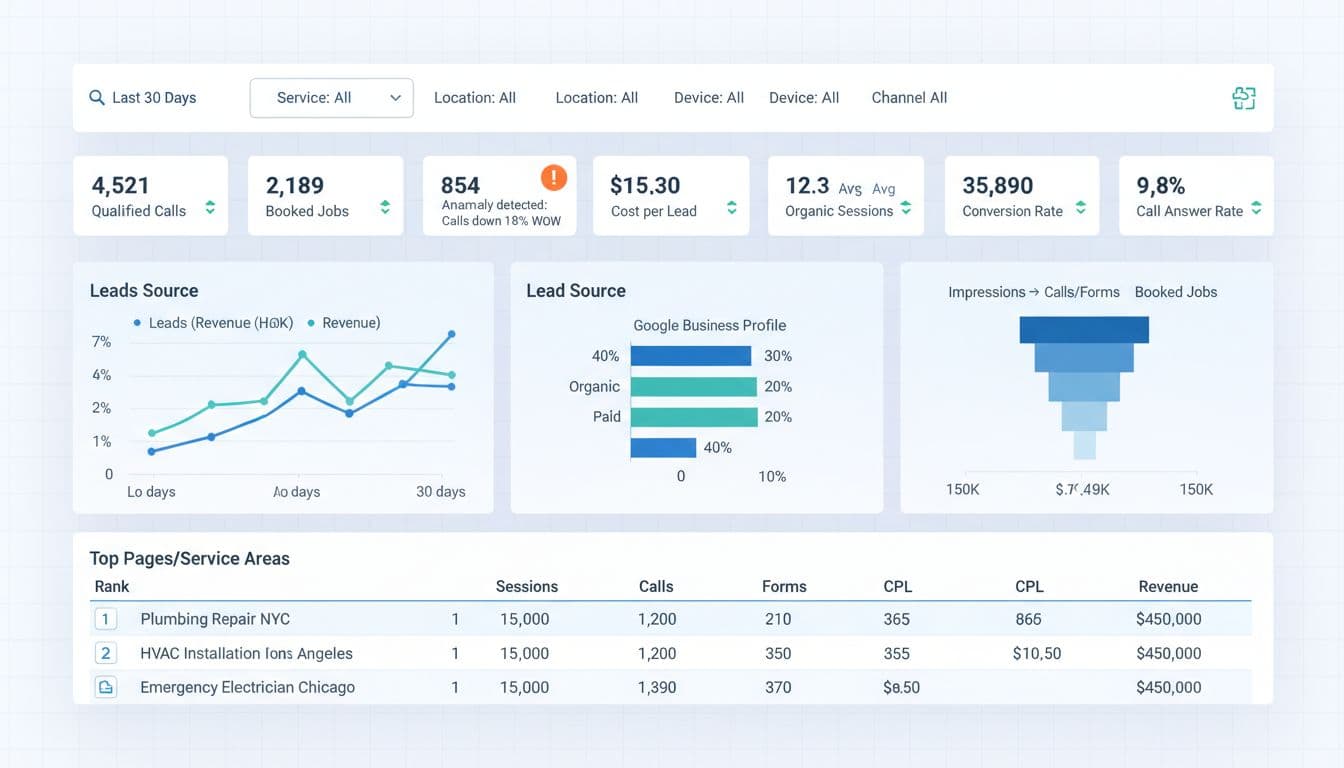
A dashboard for pay-for-performance SEO should read like a dispatch board, quick signals first, details one click away. Keep it to one screen if you can.
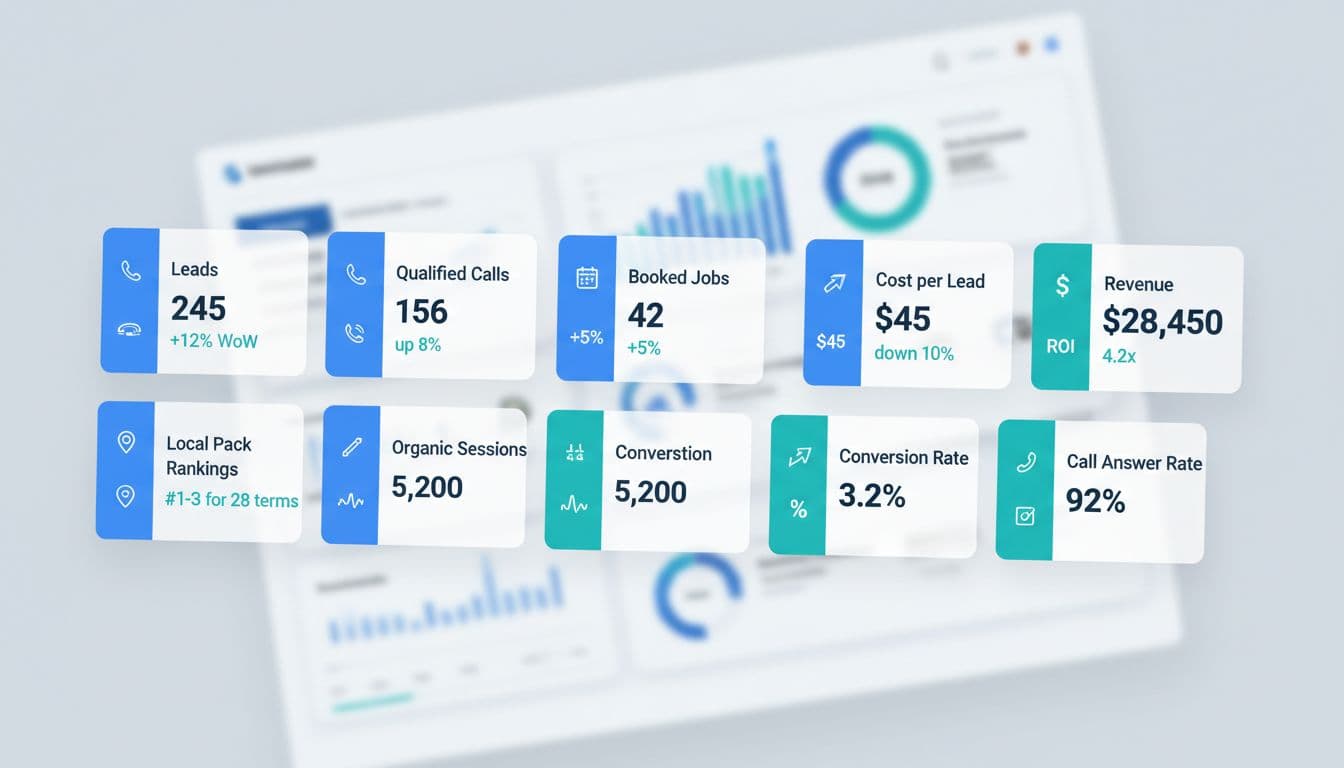
Put these at the top:
If you only build one “owner view,” make it this row.
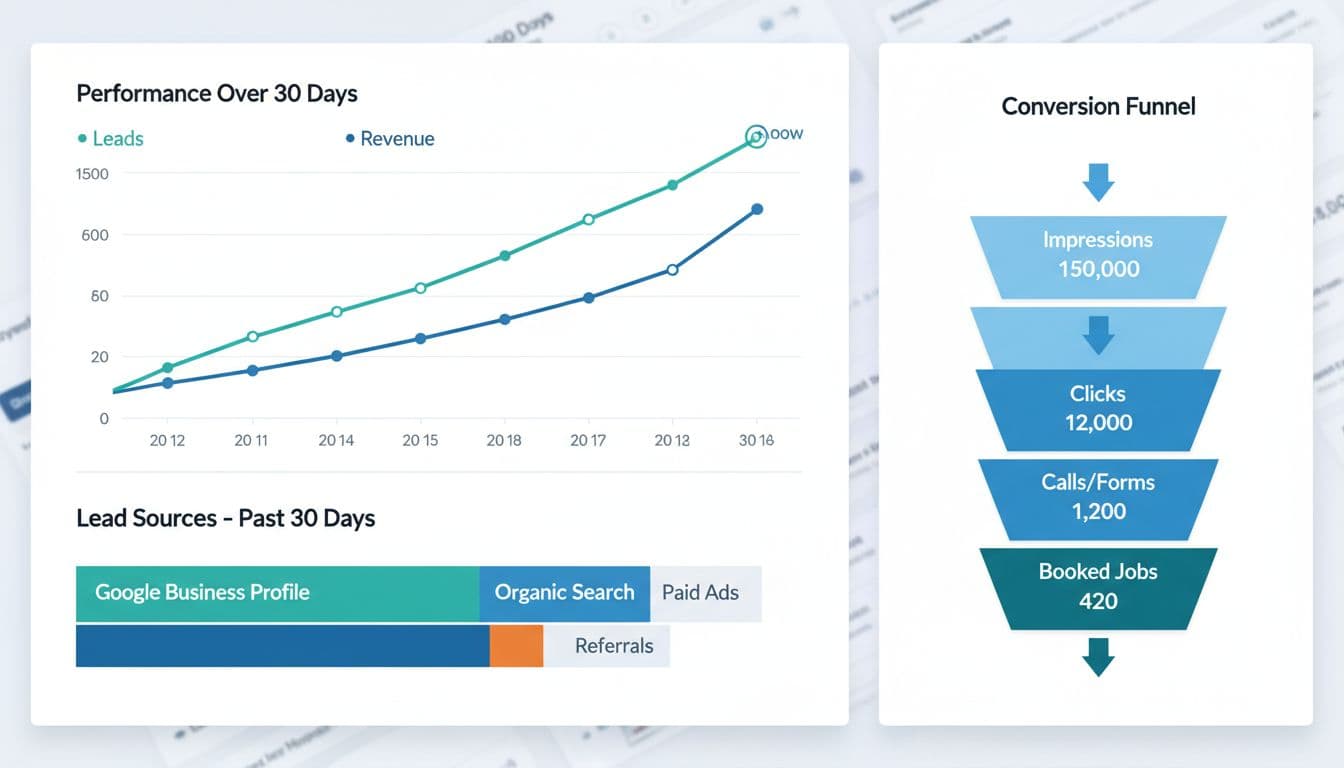
Use three charts that people actually read:
Leads vs revenue trend: If leads rise but revenue drops, quality or close rate is slipping.
Lead source mix: Split Google Business Profile actions, organic website leads, paid, referrals. This helps stop the “SEO did nothing” feeling when Maps is doing the heavy lifting.
Funnel: Impressions to clicks to calls/forms to booked jobs. It shows where the leak is.
Pay-for-performance only works when both sides see the same math.
Two practical tips:
Separate “tracked leads” from “approved leads.” Your dashboard can show both. Tracked leads measure marketing activity, approved leads drive billing.
Make revenue attribution rules clear. For example, if SEO created the first call but the customer returned via direct later, decide how you credit it. Then automate that rule.
If you’re comparing pricing models, it helps to start with transparent terms so the dashboard matches the agreement. Here’s a clear example of performance-based options and what’s included: Transparent Performance SEO Pricing.
A dashboard is passive until it starts tapping you on the shoulder.
Good alerts for home services include:
Calls down week-over-week: Often a ranking shift, a GBP issue, or tracking broke.
Answer rate below target: Marketing might be working, but the office is missing the win.
Spike in “unqualified” tags: Could be a keyword intent problem, or an ad/SEO page mismatch.
Tools like Geckoboard are built around broadcasting live KPIs to teams, which is useful if you want this on a TV in the office: real-time KPI dashboards.
A real-time SEO dashboard turns pay-for-performance SEO into something simple: agreed rules, shared numbers, and quick action. When you can see leads, qualified calls, booked jobs, and revenue in one place, you stop guessing and start managing. The win isn’t more charts, it’s trust in what’s happening today. If you’re paying only when results show up, the dashboard should make those results obvious, and hard to argue with.


