
If you’re a service-area business, Google Maps can feel like a slot machine. Some calls are perfect, nearby, ready to book. Others are 45 miles away, shopping for prices, and you’re stuck playing phone tag.
That problem gets sharper with pay for performance SEO. When payment is tied to results, everyone needs the same definition of a “real” lead, and you need fewer time-wasters from outside your actual service radius.
This guide breaks down why map-pack leads drift, how to prevent out-of-range calls before they happen, and how to set clear lead rules so performance-based pricing stays fair.
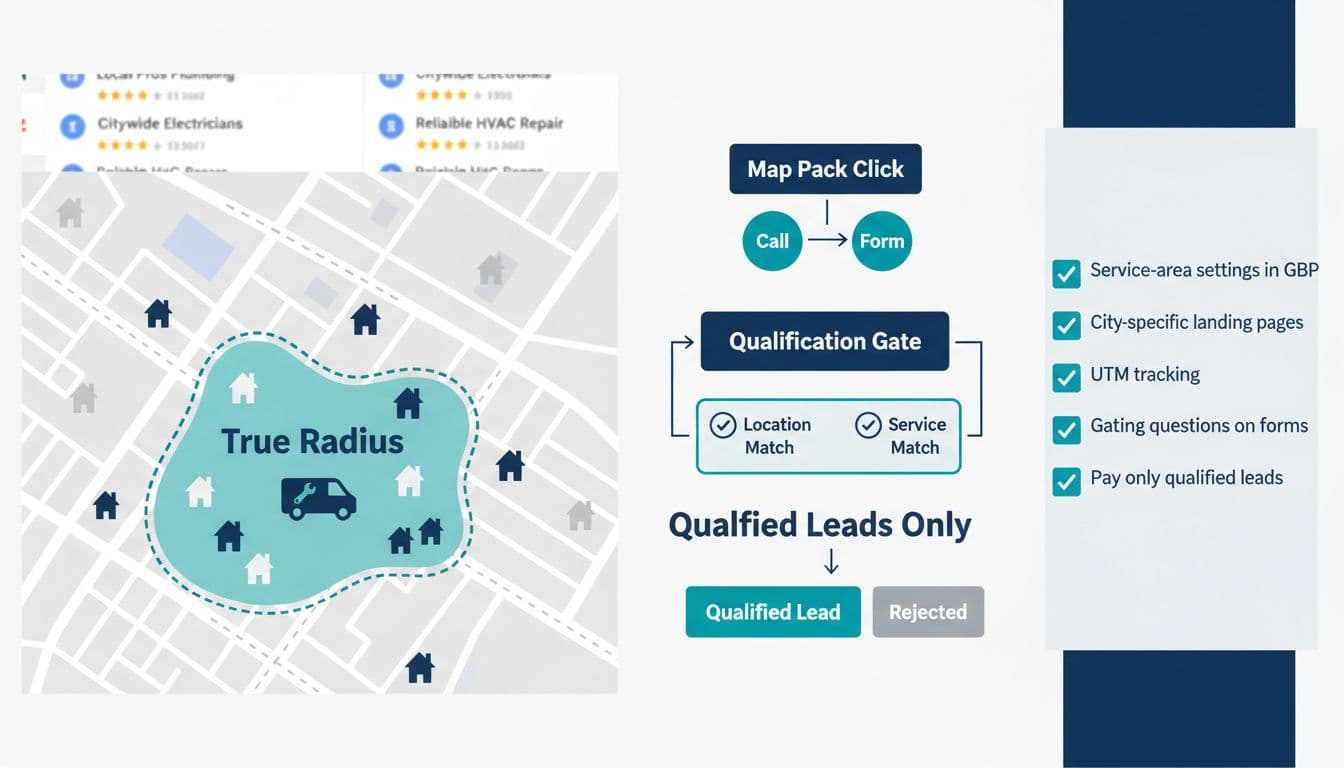
Google’s local results are heavily shaped by distance. Even if you “serve the whole metro,” Google still tries to show the closest option it trusts. That’s why two people searching the same term can see totally different map-pack listings.
Service-area businesses (plumbers, roofers, mobile vets, cleaners) get hit twice: you’re competing against nearby shops, and Google is guessing where you’re willing to drive. When your signals are fuzzy, Google tests you in places you don’t want.
If you’re trying to understand why ranking fades as you move away from your base, read local search’s distance bias explained. It’s a clear look at how proximity shapes visibility.
In a traditional monthly retainer, out-of-area calls are annoying. In pay for performance SEO, they can turn into billing disputes, slow approvals, and distrust.
So the goal isn’t only “rank more.” It’s “rank where you can actually serve,” and set up lead tracking so you can prove it.
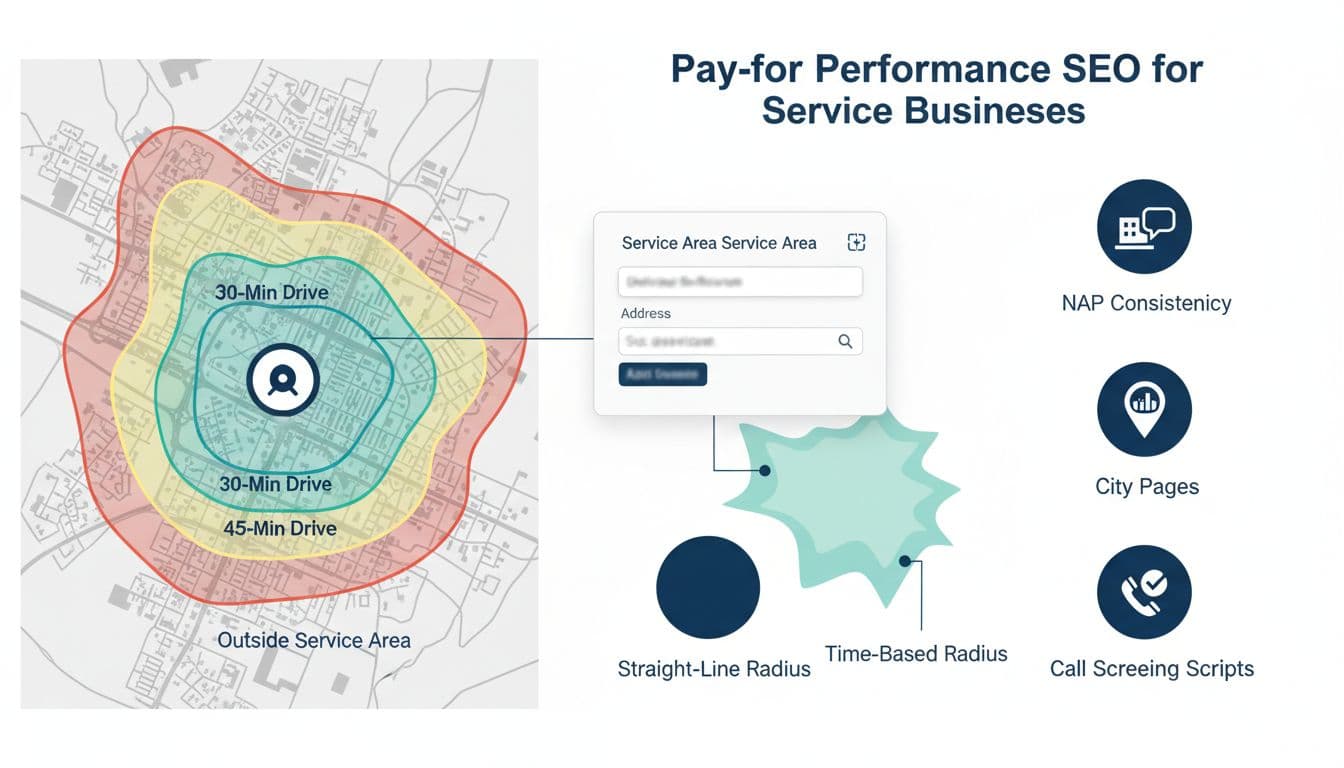
A “true driving radius” usually isn’t a perfect circle. Traffic, bridges, highways, and bad turns matter. Think in drive-time zones (like 30 minutes, 45 minutes), not miles.
Then, align your Google Business Profile (GBP) service area to match reality. If you list far-away cities “just in case,” you invite far-away leads. Tightening your service area can reduce junk calls quickly, even if it feels scary at first.
A practical way to plan coverage is to pick:
If you want a solid SAB refresher, this service-area local SEO guide covers how GBP setup and location pages work together.
Google doesn’t only read your service-area settings. It cross-checks your business details across the web.
A few basics that matter more than most owners think:
This is boring work, but it’s the kind that prevents the wrong leads from showing up in the first place.
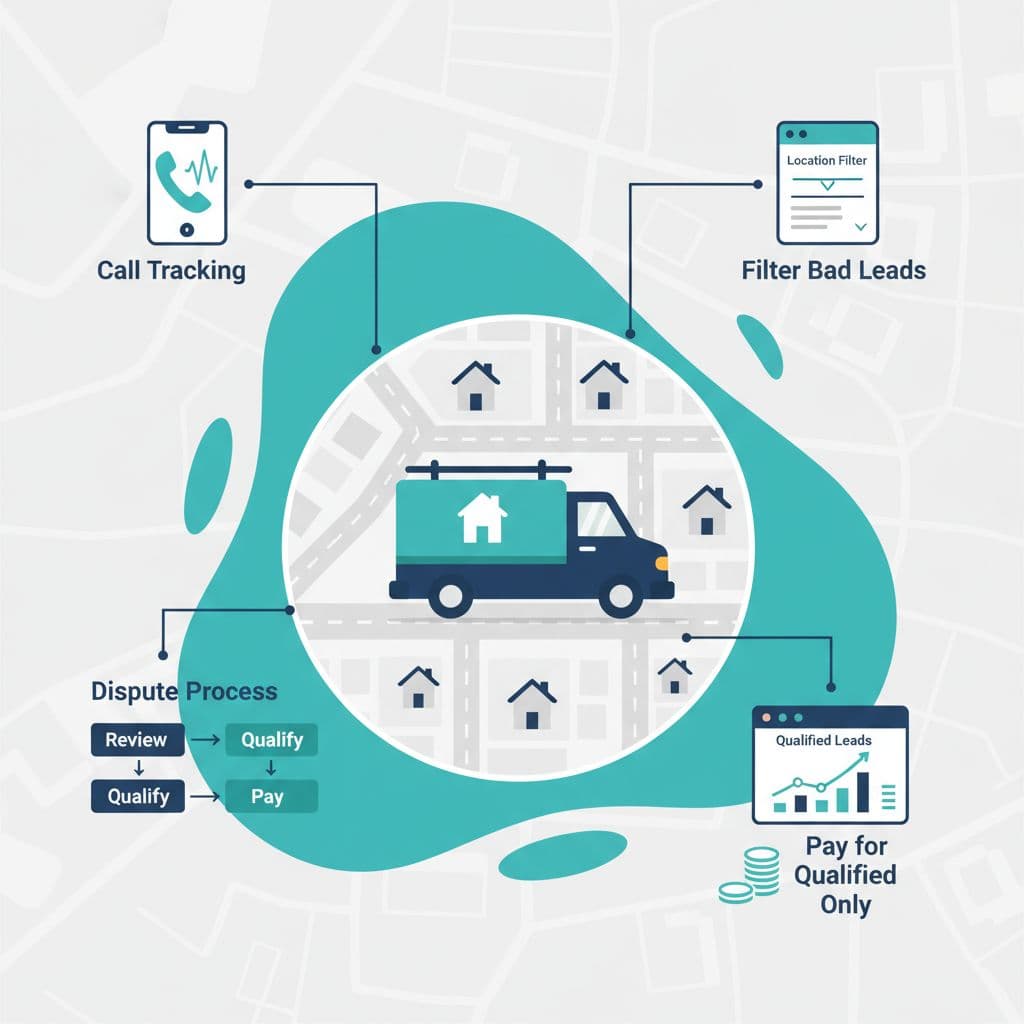
If your team can’t prove where a lead came from, you can’t control billing or improve targeting.
At minimum, tie map-pack leads to:
You don’t need to overcomplicate it. You just need a clean trail from “Maps click” to “customer location.”
For businesses trying to expand while staying realistic, BrightLocal’s guide to ranking beyond your location is helpful context on how hard distance can be, and why you should be intentional about where you push.
A good lead screen is like the bouncer at a busy venue. It keeps the place enjoyable for the people who belong there.
Add one small gate at each step:
Here’s a simple “counts vs doesn’t count” framework that works well in pay-for-performance setups:
| Lead status | What it means | Typical outcome |
|---|---|---|
| Accepted | In service area, wants a service you offer, real contact info | Billable/approved |
| Rejected: out of area | Address or stated location is outside your agreed radius | Not billable |
| Rejected: wrong service | Looking for a service you don’t provide | Not billable |
| Rejected: spam | Robot calls, fake forms, nonsense requests | Not billable |
| Review needed | Unclear location or intent, missing info | Hold until verified |
When disputes happen, speed is everything. A written process keeps emotions out of it. Use a documented workflow like Piggybank’s review-approve-reject lead dispute process so everyone plays by the same rules.
And if you’re comparing models, it helps to see how performance-based pricing is structured. Piggybank lays out pay-only-after-you-rank pricing details and the broader benefits of pay-for-performance SEO so expectations are clear upfront.
Map-pack leads drifting outside your true radius isn’t random luck. It’s a signal problem and a process problem. Tighten your service area, back it up with consistent business info, and add light qualification gates so the wrong calls don’t reach your calendar.
When pay for performance SEO is paired with clear tracking and clean lead rules, it stops feeling risky and starts feeling fair. The best question to ask now is simple: are you paying for visibility, or paying for jobs you can actually take?


