
You built pages for nearby towns, hit publish, and waited for calls. Yet your main city ranks, while the next town over stays invisible. That happens all the time with service area pages.
The problem usually isn’t distance. It’s relevance, proof, and structure. Google won’t rank a page in another city just because you say you serve it. It needs a reason to trust that page, and a reason to trust your business there.
A city five miles away can feel close to you. To Google, it’s still a separate local market.
That’s why many service area pages stall. They mention the city name a few times, list the same services, and call it done. However, the page never proves real ties to that area. It reads like a copy, not a local answer.
A strong nearby-city page needs signals that tell a simple story: you do this work, in this place, for people like the searcher. If that story is thin, rankings stay thin too.
Here are the signals that help most:
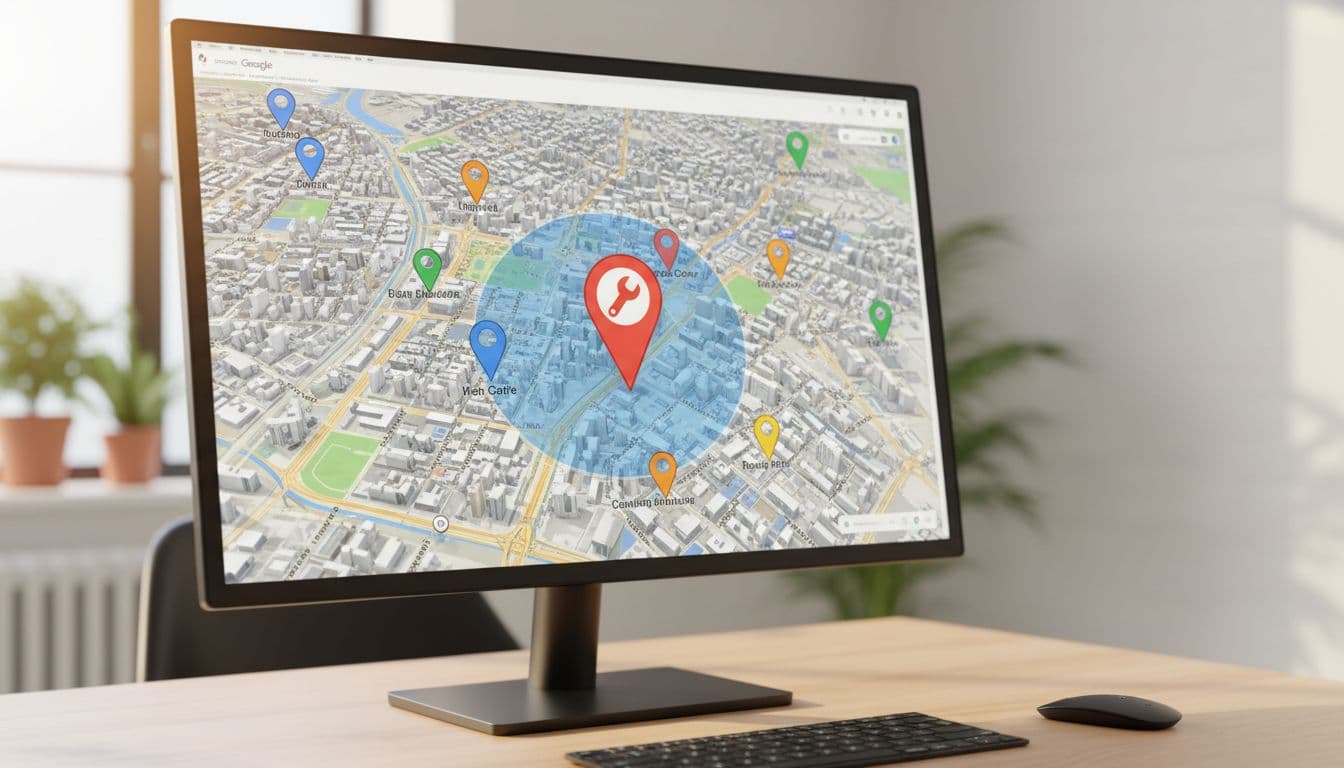
Map visibility matters too. If your Google Business Profile barely shows outside your core town, your pages often struggle as well. That’s why solid Google Maps SEO strategies often help nearby-city rankings move faster.
Think of it like opening a second storefront. You wouldn’t tape your first city’s flyer to a new window and expect a line out the door. You’d add local signs, local proof, and a real reason to stop in. Your city pages need the same treatment.
Many small businesses create ten, twenty, or fifty city pages in one burst. On paper, that feels smart. In practice, it often creates a pile of weak pages that compete with each other.
Google has seen this pattern for years. One template gets cloned, the city name changes, and everything else stays the same. Same headline. Same service list. Same stock photo. Same call to action. That looks less like local expertise and more like a doorway page.
If the only thing that changes is the city name, Google sees one page wearing many hats.
This is also why some businesses watch blog posts rank while money pages sit buried. Informational content can be easier to trust. A nearby-city service page has to do more. It has to show service details, local fit, and buyer confidence at the same time. If your service pages not ranking problem sounds familiar, weak page focus is often the reason.
A better move is to build fewer pages, but make them stronger. Add local project examples. Write a short section about how the service works in that area. Include FAQs based on real calls. Mention service boundaries clearly. Show proof that you didn’t create the page only for search engines.
Five strong pages can outperform twenty thin ones. Every time.
Sometimes the page is solid, but the site setup gets in the way.
Nearby-city pages often fail because they’re buried deep, orphaned from the rest of the site, or blocked by a bad technical setting. A page with no internal links is like a billboard hidden in the woods. It exists, but almost nobody sees it.

Start with the basics. Make sure each city page has a unique title tag, a unique H1, and a clean URL. Check for accidental noindex tags. Review canonicals so they don’t point every city page back to one master location page. Then look at mobile speed, because most local searches happen on phones.
Site structure matters just as much. Your main service pages should link to the cities that matter. Your city pages should link back to the related services. That creates a clear web of relevance, and it helps search engines understand what belongs where.
Most importantly, track outcomes by city. Don’t settle for reports about impressions and broad traffic. Watch calls, forms, and rankings from the towns you want to win. If an agency can’t tie work to measurable movement, you’re paying for motion, not progress. A results-based performance SEO model keeps the focus on pages that rank and bring leads, not pages that simply exist.
Nearby-city rankings aren’t won by volume. They’re won by clarity.
Your service area pages need real local proof, strong page focus, and a clean structure that supports them. Start with one nearby city you already serve well. Build that page like it has to earn trust from scratch, because it does.
Then repeat what works, city by city, instead of flooding your site with pages that never had a chance.


