
Page 2 is where decent service pages go to disappear. You’re not invisible, but you’re easy to pass by.
If your service page SEO feels close but never quite breaks through, that’s usually the problem. The page looks fine on the surface, yet Google still sees weak proof, mixed intent, or a stronger page somewhere else on your site. Once you spot the real issue, the fix gets much simpler.
Most service pages on page 2 aren’t being punished. They’re sitting in a gray zone.
Google sees the topic, but it doesn’t fully trust the page as the best answer. That happens a lot with local service businesses, because many pages sound the same. “Trusted team.” “Top-quality work.” “Free quote.” Those lines don’t give Google, or a buyer, much to hold onto.
That matters even more in March 2026. Google’s latest spam update and core update are putting more pressure on thin, mass-produced pages, weak trust signals, and generic copy. If a page feels padded or templated, it can stall while stronger pages move up.
So what helps? Clear intent, real proof, and sharp page focus. Your page should show what you do, where you do it, who it’s for, and why someone should trust you.
A solid service page usually includes original photos, specific service details, reviews tied to the job, local context, and a clear next step. It also helps when the page reflects real experience instead of broad marketing talk. For a wider look at what small businesses should still get right this year, this 2026 small business SEO guide covers the basics well.
Page 2 usually isn’t a visibility problem. It’s a clarity problem.

Small business owners often assume they need backlinks first. Sometimes they do. Still, page 2 usually starts with page-level problems.
The biggest mistake is trying to rank one page for too much. If your page targets one service, four related jobs, and five cities, the message gets muddy. Google can’t tell what that page is supposed to own.
Weak top-of-page copy is another common issue. When the title tag, H1, and opening paragraph don’t line up, the page sends mixed signals. Visitors feel that confusion too. If they land, hesitate, and leave, the page won’t look strong.
Internal links also matter more than most owners think. If your blog posts, menu, and city pages keep pointing to the wrong URL, Google may rank that page instead. That’s where cannibalization starts. If that sounds familiar, this guide to fix wrong page ranking can help you sort it out.
A few more issues show up again and again:
If you want a second audit angle, this on-page checklist for a low-ranking service page is a useful reference.
The fix usually isn’t more words. It’s better words, better proof, and better structure.
Start at the top. Your headline should say the service, the area, and the value in plain language. Then the first few lines should confirm the page is for the right customer. Nobody should need to scroll to figure out what you offer.
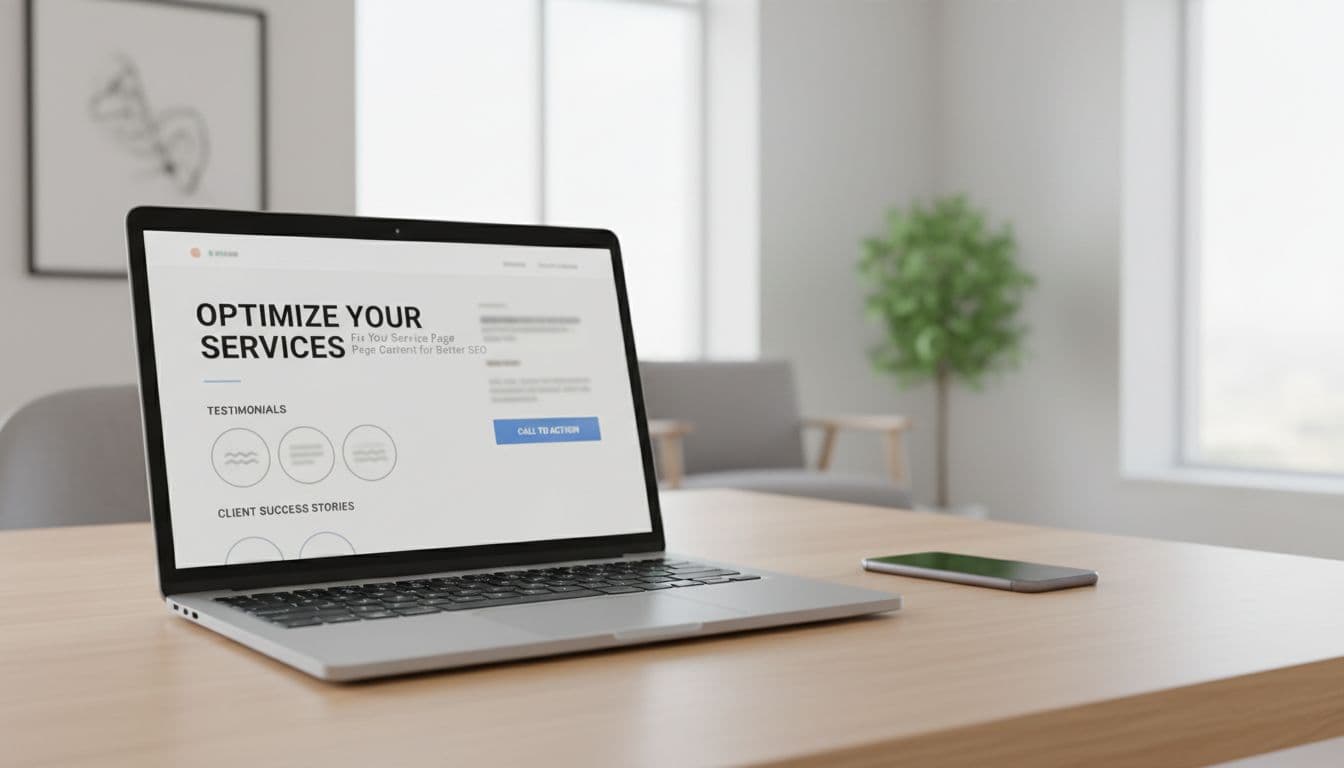
Next, build the middle of the page around proof. Explain how the service works. Show what’s included. Add reviews that mention the exact job. Include details about your service area that only a real local company would know.
This is where service page SEO often improves fast. Add short sections that answer buying questions. What affects price? How long does the job take? What happens after someone contacts you? Those answers help rankings because they improve relevance, and they help leads because they reduce doubt.
Keep related pages working together. Your main service page can link to city pages, case studies, and FAQs. Those supporting pages should link back with consistent anchor text. If local visibility matters, pair that work with Google Maps SEO service support so your website and Google Business Profile strengthen each other.
Finally, cut vague copy. Generic claims take up space without adding trust. This breakdown of how to improve rankings for service pages makes the same point from another angle: focused pages with clear proof tend to win.
This is where many owners get frustrated. They pay for SEO, receive reports every month, and the service page still sits on page 2.
A better standard is simple. The work should tie to approved keywords, lead quality, and pages that make money. That means watching calls, forms, and the exact URLs tied to those leads. If a page doesn’t move, the strategy should change fast.
That’s why performance-first models make sense for many service businesses. When billing depends on results, nobody can hide behind busywork. If that approach fits your business, this guide to results-based SEO pricing explains how an outcome-driven model works.
Your service page doesn’t need to be perfect. It needs to be clearer, stronger, and more believable than the pages around it.
If it’s stuck on page 2, Google is telling you the topic match, trust, or structure still isn’t strong enough. Fix the page with proof, tighten the focus, and judge the work by rankings and leads, not motion without progress.


